“The forces of evolution act upon a man’s tools as well as upon man himself “
A.C. Littleton (1926, P.12)
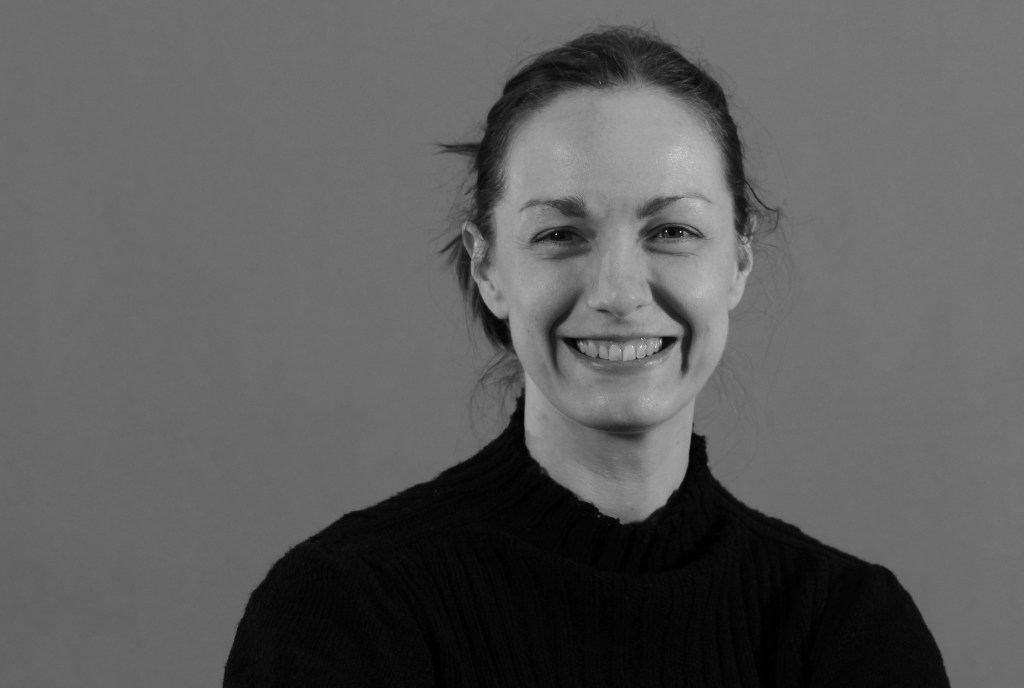
Welcome to the tale of an Accounting Academic who transformed into an Accounting Technologist, Accounting Historian, Accounting Anthropologist and a pretty decent knitter…
Dr. Lesley Niezynski is an early career interdisciplinary accounting researcher specialising in accounting technology, history and humanity. Lesley’s research centres on the interconnectivity between accounting, humanity, and technology.
Lesley has recently completed her PhD, a project centred upon the interconnectivity between humanity, accounting and technology through a study of Maritime Technology, Accounting and Merchants in Early Modern England.
Prior to accounting, Lesley’s interest in boundary blurring, human-centric research formed in her studies in Architecture, with studies in the interconnectivity of Architecture, Fashion, and Health.
What is she up to right at this very moment? Find out here.
I’m now on Substack! Find me at https://accountingforhumanity.substack.com/
-
Promethean ShAIme: Are people the problem with AI?
Over the last 7(ish) years, I have both researched and observed our growing relationship with AI.
Now, while I have not extended the particular observations I am about to discuss in any official or robust research capacity (hence it is in my unpublished ponderings), I have become increasingly aware that that a big problem with AI is that it is being partially corrupted into a vanity project.
What on earth do I mean by that? Well, allow me to waffle/explain…
For the past few weeks, every social media platform has been flooded with “Action Figures”. I have borne witness to almost every conceivable, known and unknown, contact being transformed into a little fantasy wrapped in a plastic prison.
Putting aside the challenges and discussions about how much resource and energy we are putting toward such frivolous activity (something I had not even thought of myself), there is something strangely contradictory about seeing AI being used in this way.
ARTificial Creativity
Note: when I say “art” I am referring to an individual creating art, as I do acknowledge “art” as in “fine art collecting” is a hugely inaccessible community for most of us.
Staying with the action figure onslaught, the main grumble/observation is how inhibiting AI appears to be on creativity despite apparently making it more “freeing”.
My first observation stems from a meme (because where else does one acquire credible information?) that highlighted the argument of AI making art “accessible” to all, whilst simultaneously pointing out that a pencil and paper are considerably less expensive in monetary and energy terms.
So when we say we’re making art “accessible” what do we actually mean? Well arguably we mean we are making forgery and falsehood more accessible.
Everyone can create art. Everyone is creative. Art is subjective. Picasso is evidence that art is not about creating photo-realistic representations of reality. So when describe AI as “making the ability to create art accessible”, it is not. Art was already accessible.
If however, your definition is based on “I want to have a machine create an image I could never produce on my own without any input from me other than a single prompt” then yes, AI is making this accessible to you but, this is not creating art, this is a glorified Google search.
That being said, that is not to say that you cannot actively engage an AI to craft a unique image (i.e., you are using AI as a “brush”, with you making all of the decisions and guiding and instructing it through every step of the entire process) this is human using an AI as their medium to create art. It is an act of self expression performed through AI, creativity is still present.
Artificial Individuality, Accessible Monotony
The next issue arises in how quickly people can use AI to eradicate creativity through monotony. The perfect example are the action figures. As my eyes were burning from the AI action figure assault, hundreds and hundreds of the same little computerised human, BUT THIS ONE HAS A HAT! (Simpsons reference for those old enough to remember the Malibu Stacey episode). Just as I was about to completely lose the will to scroll, I was saved by those who adopted the “anti-AI action figures”.
These “Lisa Lionhearts” (again with the Simpsons) have challenged the trend by opting to draw/create their own version of the action figure, and while it is yet more action figures, what is immediately apparent is the variety. Every drawing style is unique to its creator, making them truly personalised by the fact that you can see the artists unique creative style in the image (for those I follow, I recognised them by drawing style rather than their action figures accessories).
This, I have always felt, is the crux of generative AI (when used in this context, I imagine there is value to be found in this ability). It strips us of individuality, we are shoehorned into a “sameness” that undermines our value and contribution as people. AI seems to encourage the need to present yourself as a “perfect” confirmative image with diversity plundered by the algorithm of AI trends.
This plays into (and is probably born of) the social media problem of living up to a fictional image of value and worth. We know what we see is not real, however, while before this falsehood lay in the filtering process, both adding filters to images to enhance them and filtering in the sense of only showing what facilitated the “image” of ourselves and out lives that we were trying to project. Now however, a large portion of what we see now, is not an altered reality, it is something that never existed at all (much of what appears on my own social media feeds now is some form of AI generated thing). While the first iterations of these AI generations seem interesting, as they multiply, they transform into a swarm of the mundane.
The more AI action figures we see, the less interesting they become yet, they persist because they become a badge of “fitting in”. The real issue here is not so much in AI action figures, energy cost aside they are fairly harmless, but in other content such as literature. Imagine if we all used AI to write our research papers, our assignments, our novels, our news reports and work related reports/writings? The thought of reading hundreds of the exact same thing (differentiated by the writing equivalent of action figure “accessories”) is enough to drive the utmost despair.
Well why not just use AI to read it then? and therein lies the next issue.
If we all use AI, what’s the point in any of it?
One paper that stays with me from my dissertation days was one wherein the effect of Google AI assistant on humans was being discussed. The AI was advanced enough to trick humans into believing that they were talking to a human trying to book appointments/reservations (a discussion for another time) but the concept arose where what if the AI ended up speaking to another AI, the job of the AI is to fulfil a task (the reservation) not to have a conversation so, if both companies used an AI why not just eradicate the conversational bit altogether and let the AI’s ‘speak’ to each other systematically?
And this is the principal point for me, if we are all going to use AI i.e., if AI writes my paper and another AI reads/reviews it, what is the point of any of it happening at all? The point it seems is vanity.
If I put my name to AI generated content, we can assume I did so because I want some sort of recognition for that AI’s work. Sure maybe it was me that asked the AI to write the paper but, if I asked you to go to the supermarket for something, I do not proceed to tell everyone that I got that item myself.
I do not turn myself into an action figure to see what I would look like as a toy (I know myself well enough to visualise that in my own mind), I do it because I want to be involved in a trend to show that I belong, that I am part of the trend.
“stop being grumpy, it’s just a bit of fun” you say. But here is the final issue…
Fun vs. Functional
AI is an amazing thing and it will change the world. Think of the medical advancements already made with AI, of the scientific developments. There is an ever-growing list of incredible things that AI will do to make our lives better, safer, longer.
But are those things a Ghibli filter or seeing your Gran as an action figure?
No.
The final thought goes to the above filter wherein any image/photo cold be transformed into Ghibli-esque cartoon. Studio Ghibli co-founder Hayao Miyazaki has in the past rejected the notion of artificially generated/automated animation and observers were swift to highlight the issues with artificially replicating an artists personal style.
Again many adopted the “its just a bit fun, don’t be so dramatic” approach but, imagine that was your life’s work, your identify being ripped-off and demeaned into a passing trend just “for fun”?
The AI conversation is completely dominated by the “job stealing” narrative and it is unlikely we would interpret it to be “harmless fun” if we came into the office on Monday to discover that an AI was replicating our contribution in the office (right down to the conversations about the weather). Suddenly everything you have worked towards, dedicated your effort to has been cheapened into gimmick. In fact, the value you added is so easily replicated that you are not really needed at all now. It is not quite so funny when it is your livelihood being threatened now is it?
A large part of this falls into the way we as a society view the arts and creative industries, with many holding an unfounded viewpoint that these creative institutions are somehow frivolous and less important than the “professions”. A strange scenario given that (for the moment) true creativity and self expression might be all we have left in the age of AI.
So what was the point of this rambling?
The true trouble with AI is not actually AI, it is people. It was people who created AI. It is people who will choose to replace other people with AI in workplaces. It is people that will choose to devalue human contribution. It is people who manipulate AI, who train AI to fulfil their own wants and needs, to marginalise others to enrich themselves. AI does not care about people, AI did not choose to focus its potential on stealing (sorry, “emulating”) Studio Ghibli’s aesthetic.
AI is not good, AI is not bad, AI is just AI. The true issue starts when AI is introduced to people.
Yes we need policy and frameworks to safely and sensibly introduce AI into our societies but we also need to acknowledge that we need this protection not to protect us from AI, but to protect us from it being placed in the wrong human hands…
-
What to do when the world (almost) falls apart
It has been a long time since the last post. A long. Long. Time.
As I entered this final year of my PhD, I did intend to “slow things down” on here as the effort had to shift to completing the thesis at a comfortable rate. I had ambitiously envisioned a fortnightly, or even monthly post during this time however, as always, life had other plans.
Beholding the proverbial “Spanner in the Works”
The 23/24 academic year began well, my timetable was entirely freed to focus on my thesis (for which I am eternally grateful) and due to this, I was making great progress on the Theoretical Framework. Joyfully I coasted through the first semester, frequently lifted by progress and potential. So much was my positivity that as 2023 came to an end I prepared myself for the next semester in good spirits. I had teaching in semester 2 and thus, I needed a solid time plan to manage teaching and keep the thesis blissfully travelling along the rails (note: my most valued lesson is that even if I only spend 15 minutes a day on it, I try to avoid taking long breaks from the thesis as it takes months to “get back into it”).
With a robust plan in hand, I was ready for 2024. This was it, the final year and I was going to get this DONE (capital letters for motivation) in good time. Then it happened. My ignorant bliss shattered as I stood watching in horror; a Golden Spanner of Doom came careening from the void and hurtled toward the cogs that were keeping my beautifully operating time management plan in motion.
With a week before the semester start, I was assigned an extra course to teach on. In mere seconds I had lost 80 hours off of my plan and everything collapsed. The whole plan was ruined, and my nicely “completed in good time” PhD was in flames. This sounds drastic but, as someone with anxiety and depression, my mental state is maintained with workable plans and, seeing a plan turned to dust is extremely stressful. I panicked, thought my PhD was ruined and felt entirely lost.
Surprisingly though, this reaction was a vast improvement. Pre-therapy 2018 Lesley would have taken months to accept and adapt to this so, to progress to a (albeit unhappy) comfortable position of muted hope within a couple of weeks was an achievement. I was honest with the leadership about my mental health and as a result I was significantly helped by the support and reassurance of the course leader. Without this support, I am confident that the panic would have certainly grown and taken over.
Thus, with a new (sort of) plan risen from the ashes, I moved through the semester without burnout or breakdown (even surviving more unexpected teaching toward the end without panic). The key lesson here came via my mentor and supervisors, that even a little work makes a big difference. I focused on reading and note-taking for my data collection and where writing was involved, I set a target of 300 words per day. These little “bite-size” pieces got me to a stage where I now have 2 of my 3 data chapters drafted and the 3rd is in note form. While I am still anxious about how long I will take to edit them to the point that I am happy with them I do not know, I am somewhat reassured that progress is happening a little bit each day.
Losing my Supervisor
Of all the challenges thus far, this one has hit the hardest. My primary supervisor is the reason I pursued a PhD, working with them was such an incredible and rewarding experience, and they have helped me grow exponentially in confidence and ability. When they told me they were leaving the university I was equal parts pleased for them and utterly devastated. They were getting a well deserved change, but I was losing the foundation of my PhD. One of the largest challenges here was expressing how much their support had meant without burdening them with guilt about leaving. A good supervisor very quickly becomes your “rock” both in research, personal, and professional development. They understood the inner workings of my writing and thinking, and this is critical in crafting your thesis. In short, the “got me” and my odd little quirks and I was terrified that I would find myself in a place where I would be misunderstood and reshaped into something I cannot be.
With this there was initial panic however, I also did accept the reality of it and thus the panic did not feel as though all was lost, I knew I would (and well, had to) find a way through. I am incredibly proud of this, I have never confronted my anxiety so rationally so it was incredible to experience challenge in this way (I believe my supervisor’s support and helping me grow in confidence has something to do with this). The positive of it all was that the individual I wanted as my new supervisor volunteered before I had to ask, so this was a little confidence boost for me and my work to be remembered (another lesson: sharing your work with your team opens new opportunities).
Now with new supervisor on board, things have kept progressing as hoped and, while I will miss my former supervisor being there (it still seems wrong they wont be there for the final showdown), I know we shall work again in future (as I will certainly continue to be a pest to them).
The Curse of Graduation Strikes Again
When I graduated from Architecture in 2009, I was greeted into the working world by the 2008 Credit Crunch. The job market collapsed, and for my “strictly average” persona as an architect (i.e., they hated almost every one of my project designs), my architecture career had ended before it began. Conveniently, by that stage I had no desire to be an architect however, upon reflection I do note and question the lack of encouragement by the university to pursue an academic career (my written work always got top marks), had they been more proactive here, I may have had a PhD in architecture for some 10 years by now.
Now that my PhD draws (frighteningly) closer to the end, the academic job market is again collapsing. Universities are haemorrhaging money and a lack of government support means that this shows no sign of speedy recovery.
This aspect is more anxiety inducing than the PhD itself. After 4 years of solid effort, where do I go now? I know there are “industry” options for post PhD but, what are they, and will I like them?
I want to research. I want to write. I want to share this with the world. These things bring me joy, I am a lifelong learner, ever yearning to learn and share more. Plus, I have realised that I am a good writer, I have potential to go far but, how will I get there?
And so the world keeps spinning…
As you can see, it has been quite a rollercoaster since the last post. I do intend to be populating research-related content on here soon, but at this late stage in the PhD journey, it is very hard to place focus anywhere else. For the next 8 months, if anything, you will see one of the infinite possible experiences of a PhD in its final stages. I suspect for some that will be helpful and/or enlightening and, if nothing else, I imagine it will be therapeutic for myself.
Or, if we are going to be honest, it may be an insight into what a procrastinating final year PhD student does instead of editing a chapter…
-
Ornament and Crime, Creativity in Academia
After spending the last few months working on a theoretical paper that will eventually (eventually being now, as I plan to return to the task after this post) my PhD theory chapter. I have been thinking a lot about how ‘academic’ writing is defined and, if creativity has a place in academic writing.
Ornament and Crime, Adolf Loos and Modernity
As is my ‘way’ of things, I begin in a non-accounting capacity. The first time I encountered the argument against ‘fluff’ (an architecture terminology for aesthetic decoration) was in an undergraduate essay on the titular architect, Adolf Loos. ‘Ornament and Crime’ is an essay composed by Loos in the early 20th century that rallies against the concept of adding ‘ornament’ (decoration) to useful objects. Having being published in the Art Nouveau era, this view at the time would have presented a stark contrast to the ornamental, free flowing and naturalistic form of this periods architects (Antoni Gaudi and Charles Rennie Mackintosh being two notable examples). Loos modernist approach of clean lines and functionality link to the concept of form is function, that an object, be it chair, vase, or building, need only to ‘be what it is’ i.e., beauty is not in the decoration but in the stark reality of ‘what is’. Furthermore, ascribing Loos ‘style’ (the concept of the aesthetic being a style would undoubtedly go against Loos view but even ‘ornament free’ is a type of style) as ‘modernism’ also suggests that ornament was a ‘backward’ choice, a regurgitating of history or something that bore no relevance in today’s world.
My essay was a critical review of Loos work and, I rather wish I had access to a copy of my essay, as I am curious to review if my own views on the subject have changed since. Here in 2023 however, my view is somewhat conflicted, I agree that ‘ornament’ can at times degrade the inherent beauty in an objects form however, to denote ornament to the realm of ‘unnecessary’ degrades the necessity, influence and beauty in art and creativity.
Keeping with architecture, consider the 21st century housing developments by house builders. Every house is the same, a variant of 3 or 4 ‘models’ arranged in a pattern that maximises the space (maximising in the sense that the space can fit the maximum number of houses not that the space is optimised for the inclusion of landscaping and green space). Having once worked for a housebuilder, it is found that to view an image of these homes without context (i.e., any view of the surrounding area), one could be anywhere in the UK, they all look the same, and they are all soulless.
Compare this with the work of Antoni Gaudi or Mackintosh, the visuality of the work of these architects is breath-taking. No two are alike (as was the point of Art Nouveau, replicating the idea of nature) and even if the aesthetic was ‘not your vibe’ the presence of visual stimuli gives the view a spark of creativity. Mackintosh in particular is an excellent example as, unlike Gaudi, Mackintosh’s work is more minimalist in its ‘ornament’ thus, showing that ornament can have a place in classical or modernist aesthetic.
So, what does this have to do with academic writing?
Academically my background has been formed from art-based fields. From Art as my favourite (and strongest) subject in school, to my 6 years of study in architecture where discussions such as the above were the norm. In any critical work I have performed, the purpose was to analyse not only viewpoints or authors/artists/architects, but to consider the impact and intention of design decisions. For example why choose red over blue in a painting, what is the artist trying to tell us, or make us feel, in choosing that particular colour or designing that space to hold light in such a way. Even in English in school, critical review of literature followed this concept. For myself, the study of the Great Gatsby is one of note, the choice of the yellow car (yellow being symbolic of death) and the green light across the way (symbolic of money and moving forward). This symbolism in literature in particular is where we reach the shores of academic literature.
In academic writing, there is (arguably, I cannot speak for all academics) there is view that ones work should be free of ‘ornament’ as creative writing (perhaps not unlike creative accounting) bears connotations of deceit. While it is absolutely true that data and factual information should not be altered to suggest something else that may be untrue, this does not mean that information cannot be presented using creative writing techniques. Research is already expanding to include creative methodology, with data being presented and analysed in collaboration with artists. If research can benefit from the vision of an artist, then why not include an artists skills in the writing?
Even if we do not use it, we should know how to find it
This is an interesting thought as, I believe that creative writing is already quite prominent in academia. This returns us to my theory paper. The paper is a discourse analysis of accounting technology literature to show why we could benefit from adopting new theories in accounting research. I wrote this paper in the same way I would have written an essay of Adolf Loos or the Great Gatsby, I was not search for the facts about technology in the literature, I wanted to know what the author felt about it. To do that I have to read between the lines, I had to analyse every word chosen and ask ‘why did they chose that word specifically?’, ‘what were they trying to say by choosing that word?’. In using this method, I unearth a treasure trove of symbology, imagery, suggestion, and creativity within the academic literature. The use of imagery and symbolism was particularly prominent throughout a number of papers. This showed me that creativity is (knowingly or unknowingly) a strong part of academic writing. It is perhaps connected to the realm of social science, or aspects that utilise a social, psychological, or human aspect as, we as humans, are far removed from ‘black and white’, there are a host of factors that come into play when discussing subjects pertaining to human behaviour.
What has created further interest however, is also the realisation that critical analysis or review of academic literature (in accounting at least) does not look to these aspects in empirical literature. I have failed to find empirical examples of literature analyses that include these deeper aspects (if you know of one, please send the details my way). Perhaps it is believed that including a creative and personal interpretation in this manner is too subjective however, it could be argued that this could point to important limitations in the research. Maybe something within the study other than the data has caused you to form a certain opinion; thus, what was it, and why would the author want you to feel that way? Even if the stance is to agree that using creative writing techniques is ‘wrong’, should it not still be common practice to look for these techniques?
Should we or Shouldn’t we get creative then?
In short, we should. However, we should be critical of how we use creativity. For example, are we using imagery to represent an event e.g., to compare an accounting scandal to a car crash. The metaphor emphasises the tragedy and trauma of the event without suggesting any misrepresentation of the factual data. The key is these elements, the data and the art, must work together to tell a factual story. Furthermore, perhaps the purpose of the study is to highlight the impact of auditing scandals and thus the intention of the paper is to evoke discussion by using certain imagery/symbolism/word choice to trigger a response in the reader. The important consideration for creative academic is that it cannot diminish the integrity of the data. You can present findings, data, and the overall message of your paper creatively, but you cannot lie.
No matter what Adolf Loos said, there is a difference between ‘ornament’ and ‘crime’…
-
Adventuring beyond the PhD (and the grave)…
Originally I intended this to be part of my Creativity post as a quick recap of recent adventures, but as usual, my writing spiralled and the brief update grew into a whole post worth of content. So, let us start this weeks double posting with my most recent adventures. Since the last post I have attended two events, neither PhD subject related but both contributing to my interest in connecting our death culture with accounting.
Glasgow Crematorium – The Glasgow Open Doors Festival
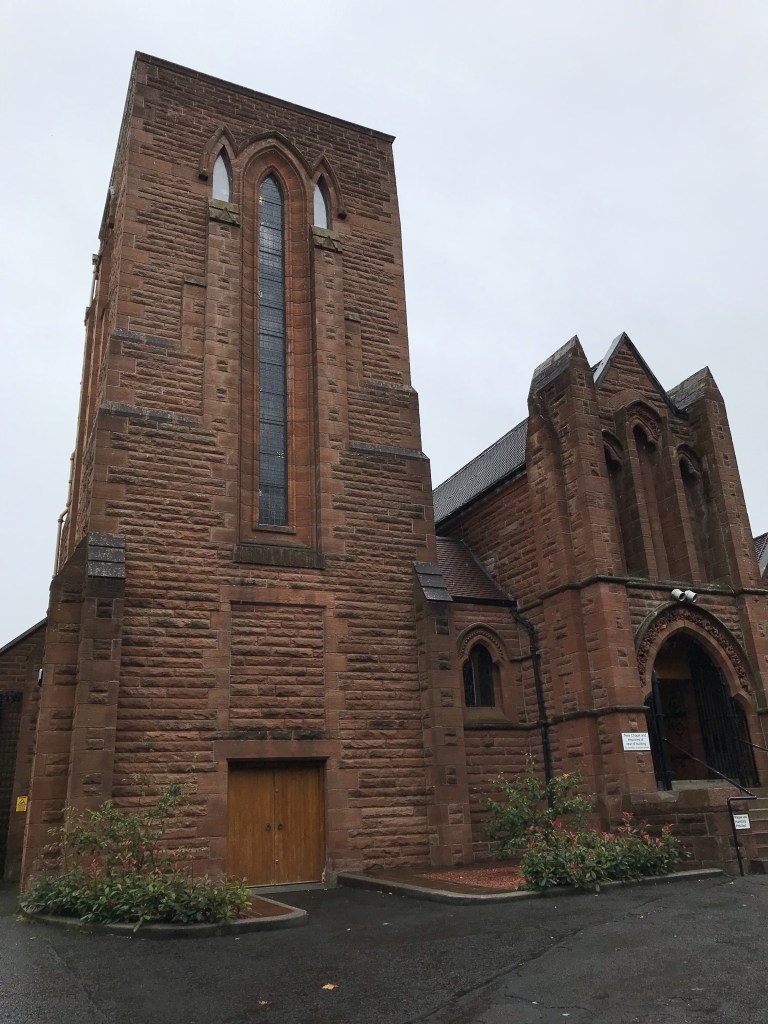
On a very rainy Sunday afternoon a few weeks ago, I set off to explore Scotland’s oldest Crematorium, Glasgow Crematorium. Built in 1895, the crematorium is a wonderful example of Victorian death architecture, relatively simplistic in aesthetic (unusual for the era) but here it is the residents who bring the power to the design. Inside the building is a beautiful multi-storey columbarium with niches filled with an array of ‘urns’ (cremains containers range from marble and timber boxes to the more recognised urn).
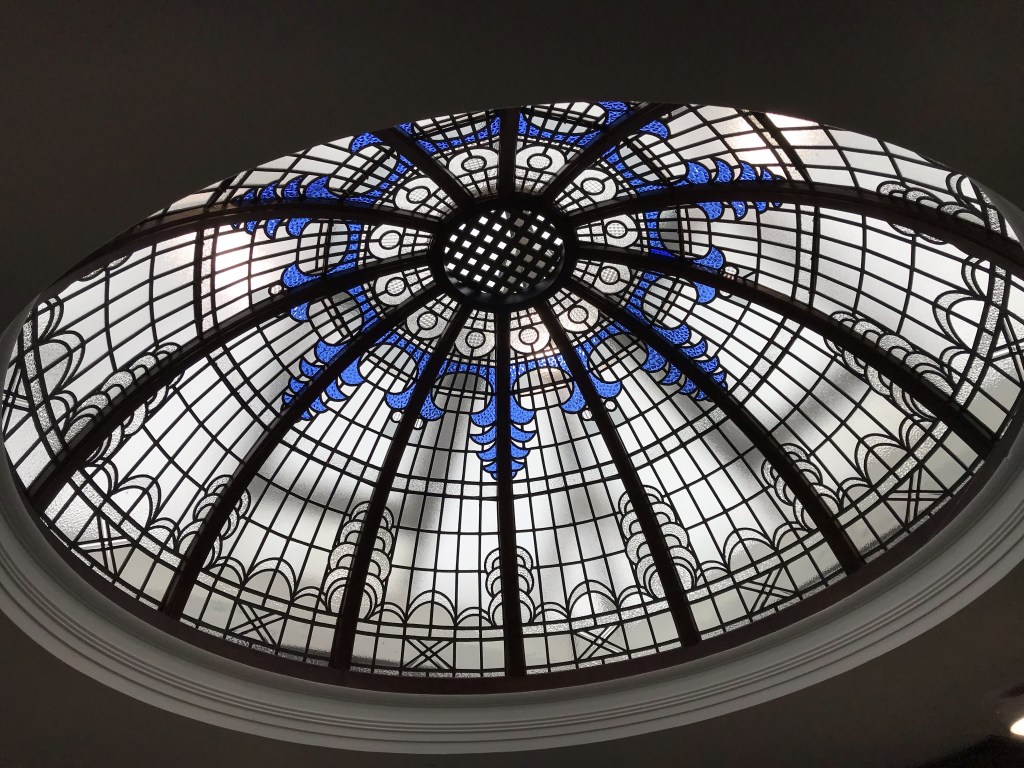
The visit included a guided tour that covered all areas of the crematorium, from a glass jar containing the first body cremated on the site (a sheep) to the furnaces, teaching us death-curious visitors the details on how the cremation process is carried out. The tour that was fascinating while incredibly respectful to the process of cremation. The only downfall of the visit was the rain as the crematorium grounds (a necropolis and memorial garden) were too wet too be explored (a good reason for another visit in the future). While it sounds macabre to spend your Sunday, this was a fascinating experience I highly recommend. The columbarium was beautiful, a library of humanity if you will, each niche containing the rich stories of a life once lived. Furthermore, it was incredibly interesting to learn how the business side of cremation works and the important role it plays in the community both in terms of the service given to families and the charitable work they carry out.
If you happen to be around for the next Glasgow open doors festival, this is a must see.
From urns to jars; The Glasgow University Anatomy Museum Open Day
This visit is the reason that we have this post a week late. Last Friday Glasgow University hosted the first of what I believe will a semi-regular event (possibly monthly), an Anatomy Museum open day. This (like the above) was another event found on my Eventbrite scouring sessions, I have visited the Edinburgh University Anatomical Museum (another venue that hosts a monthly open day I believe) so it seemed only right to pay Glasgow a visit.
While the focus here is the contribution to science (there is an option/facility to donate your body here but I could not find a link to add), this is undoubtedly still a place of death and memorialisation. The inhabitants are anonymous and (rightly so) no photos/sketching/recording of any kind are allowed so there is something very different about this place. On the one hand it is fascinating to essentially see what your insides actually look like yet, on the other this creates a strange sensation that you do not get anywhere else where remains are interred. There is a transparency unequivocal in view the actual body parts of a human (or animal in some cases) yet, there is a complete sense of mystery as you will never know anything of this person other than what this particular part of their body looked like.
It was most definitely a powerful and (another) fascinating experience, worth a visit (if you are not squeamish) to either Glasgow or Edinburgh’s anatomy museums (as a note Edinburgh contains more skeletal specimens, Glasgow is more focused on organs, tissue).
Final thoughts (or ramblings) on places of finality…
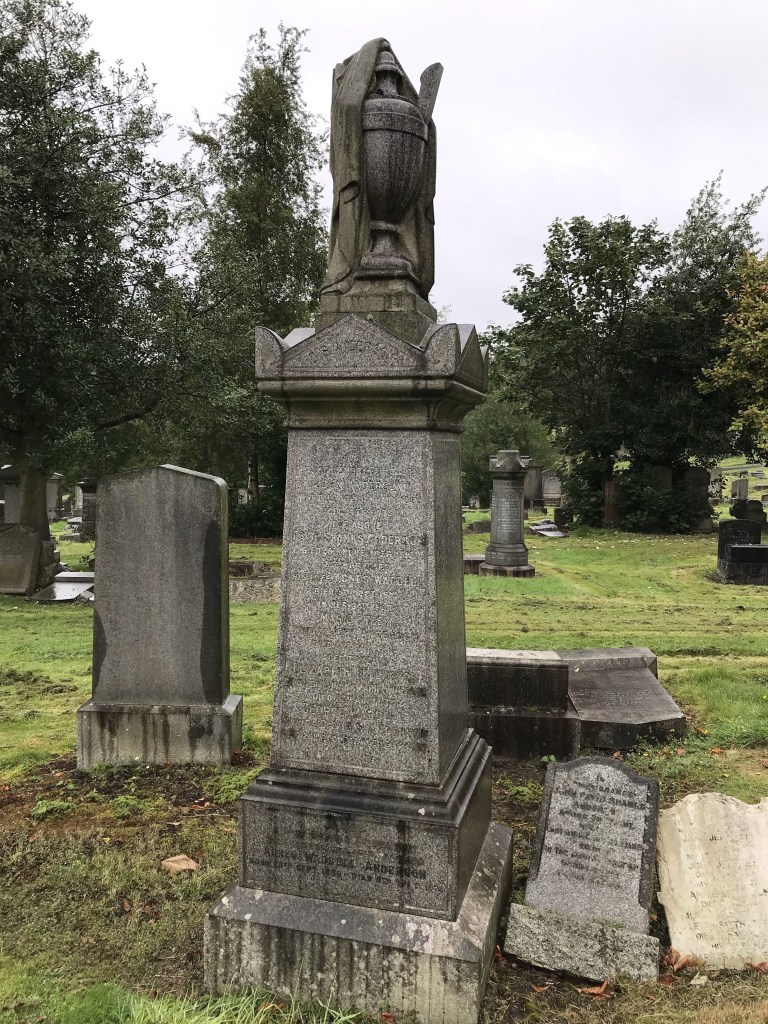
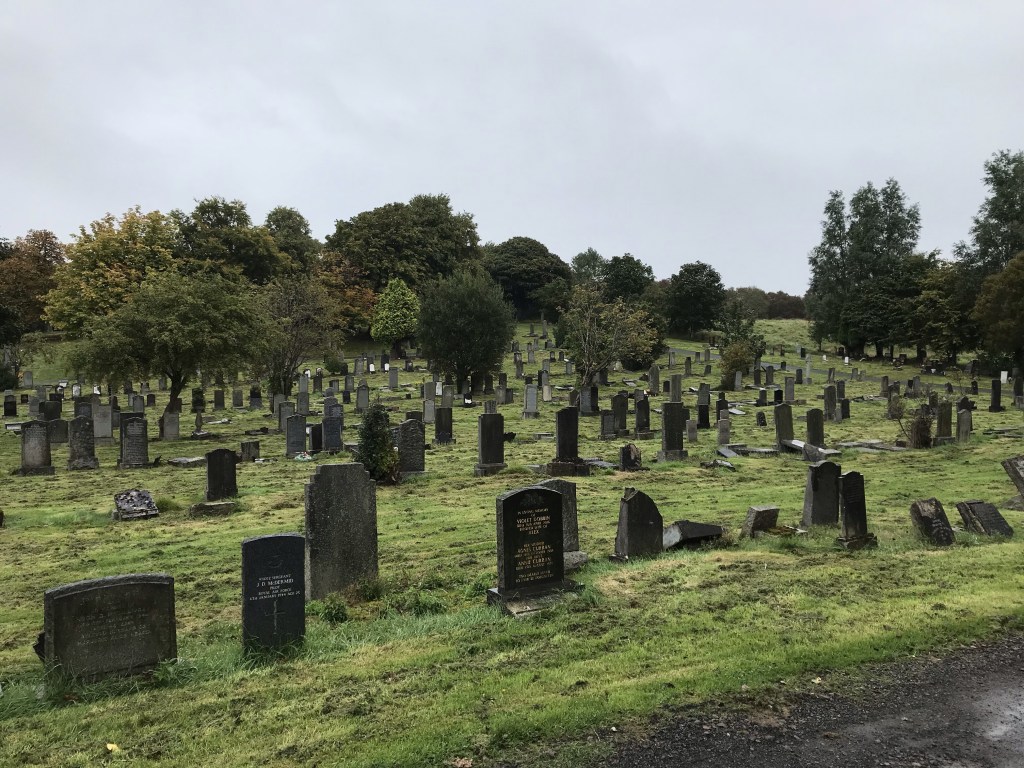
Both of these visits were almost beyond words, I know places of death are not for everyone however, visiting places like this (for me) are proving so crucial to surviving my PhD. Focusing specifically on the crematorium (and other cemeteries I have visited), the term “resting place” is not just intended for the people interred there. Memorial grounds are wonderful places of reflection. Particularly looking toward older cemeteries, these spaces were designed to also function as green space/parks, places where the living could go to reflect and enjoy nature, art and time with loved ones lost. For those of us visiting sometimes hundreds of years after the inhabitants deaths, it becomes an opportunity to reflect on past, present, and future. Focus turns from modern life’s trials for a few brief moments as you read the details of those around you; who were these people, what were their lives like, who did they leave behind? For myself, visiting a cemetery switches everything else off for a short time, instead of worrying about my PhD, I give a few brief moments to give something back to the people of history. It is said that we die two deaths, one when we physically die and again in the last time someone speaks our name. So every now and then, I find a strange comfort in putting aside my own worries to help a fellow human achieve some kind of immortality…
-
Research To-Do: Death & Double Entry
As I (try) to embed the habit of regular posting I have realised that fully researched/cited blog posts in conjunction with researching/writing a thesis may not be entirely plausible as ‘down time’ is very much a PhD necessity (after all, Halloween sweaters do not knit themselves). I do however, desire to share my research thoughts and interests thus, “Research To-Do”.
One habit I have fully embraced in my 2+ years so far is the collation of a “future research” list. This list is lengthy and I am impatiently waiting to get started on it. So, to appease my desire to discuss these topics without fully committing to fully researching them at this point in time, this new series is my way of introducing you to my research interests.
Death & Double Entry: Accounting and the Dead
First on the To-Do is death. As a researcher, and a human, other humans are fascinating. Life and how society lives it is fascinating. There is one aspect of life that as humans we all share, and that is death.
Death culture in society is among the most diverse aspects of life. Almost every society views and treats it differently, even within the same society, that view can change over time. For myself, it is the historical aspect of death, the ‘what is left behind’. Death leaves behind a legacy of life, a final account of the human that once walked this earth. Good or bad, memorialisation of the dead is the (tinted) window to the past. Should we wish to view the historical activity of a company, one place we would turn is its ledgers, if we wish to view the historical activity of a society, we too might turn to a more physical, sombre ledger, a cemetery.
And this is where I admit that I am a taphophile…
A what?
‘Wiktionary’ (website discovery of the day) tells us that Taphophilia is the “Deep interest of funerals, cemeteries and the rituals of death.” And this quite accurately sums up my interest.
For many, the cemetery/graveyard/kirkyard/churchyard/necropolis is an unsettling and sombre place. As mentioned, for myself, they are windows to the past, memory and art combined. Must can be learned about a person (and a society) from their head (or foot) stone. In my conferencing this year, I’ve been able to explore a small number of cemeteries/graveyards/kirkyards, and in doing so I have learned and been reminded of many an interesting lesson.
Women’s Place and Death in History
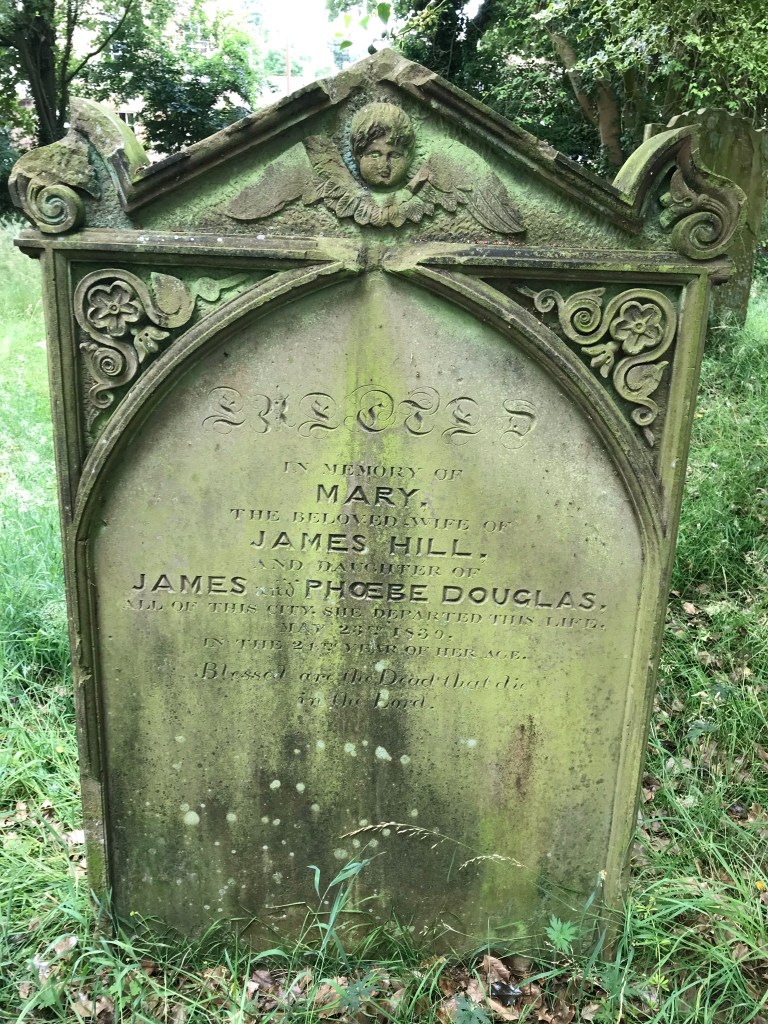
Mary’s Headstone in St Oswalds Churchyard Wildlife Meadow, Durham The inequality faced by women throughout history is certainly not new knowledge however, seeing the historical graves of women in the UK has reminded me of how little the contribution of women was valued. Almost all women’s grave markers told us not who this woman was, but who they were associated with. In some cases, women’s grave markers actually had more space dedicated to detailing the life and successes of their husbands than what they themselves achieved in life. It serves as a painful reminder that for the most part, women have been consigned to being a mere footnote in history, an accessory, or possession, of a man.
There are exceptions though, in the world famous Greyfriars Kirkyard, I discovered a remarkable memorial for Elizabeth Paton. The memorial is in Latin (I am learning but not quite at the level to translate) however, placing faith in Canmore the inscription details the many virtues of Elizabeth. It is likely that these will still focus only upon her role as a wife and mother (not a criticism of being a wife and mother, merely emphasising that women are individuals out with these roles) however, whatever it may say, at least it is dedicated purely to Elizabeth, the centrepiece of their own memorial as they should be.
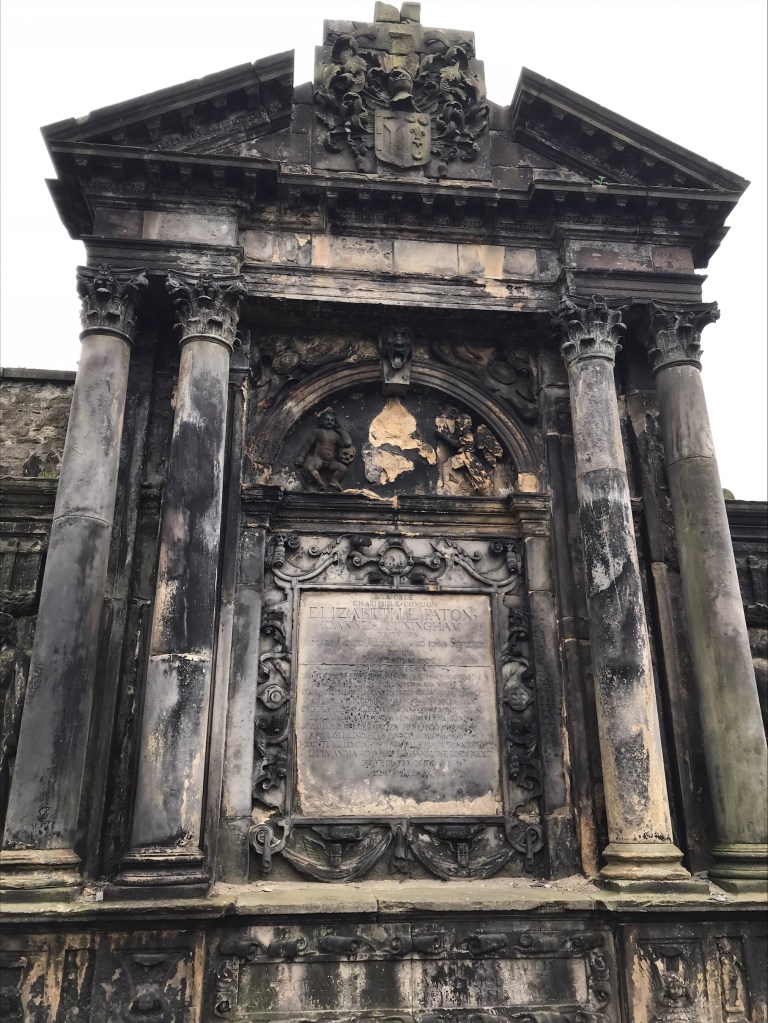
Memorial of Elizabeth Paton, Greyfriars Kirkyard, Edinburgh And what does any of this have to do with accounting?
As hinted above, accounting holds strong connections to death and the connection depends on how you answered the question of “what is accounting?” a few posts previous. If accounting is a purely financial exploit to you, then certainly there are avenues to be explored in the realm of the dead, be they analyses of death-related organisations or the financial position of individuals at their time of death.
If, like myself, you believe that accounting is more than the act of financial recording then there are many more avenues to explore in the land of the dead…
‘Accounting’ expanded is the act of taking account, making a record of something, be that financial or otherwise. To ‘take account’ is much like the concept of accountability, proclaiming responsibility for acts or possessions. One are where this gains interest is in religion, death and accounting. The ancient Egyptians among many civilisations, took details accounts of endeavours and offerings made in the name of the Gods. In doing so they were garnering favour with the Gods, proving their worthiness for a comfortable place in the afterlife. In this approach, accounting becomes a pivotal part of death, accounting for God(s), even in contemporary media, I am reminded of Johnny Cash singing how “the old account was settled long ago” in reference to gaining entry to heaven.
Study could also extend into accounting, society and death in a similar manner. Consider the prominence held in ‘public opinion’ both now and throughout history.
And now back to the land of the living….
There is certainly much scope in this area and I hope that one day I can explore this avenue to contribute to conversations around death and the death positivity movement. Death is all around us, Memento Mori’s lie scattered throughout our world, hidden in plain sight. Even within the very grounds of my university lies the Burial Ground of the family who once governed the estate where Heriot-Watt’s Edinburgh campus now stands.
For some, good accounting is all about hard work and reaping the rewards, for others, it is about accounting for the souls reaped long ago. Hold onto those pennies, you will need them for Charon…
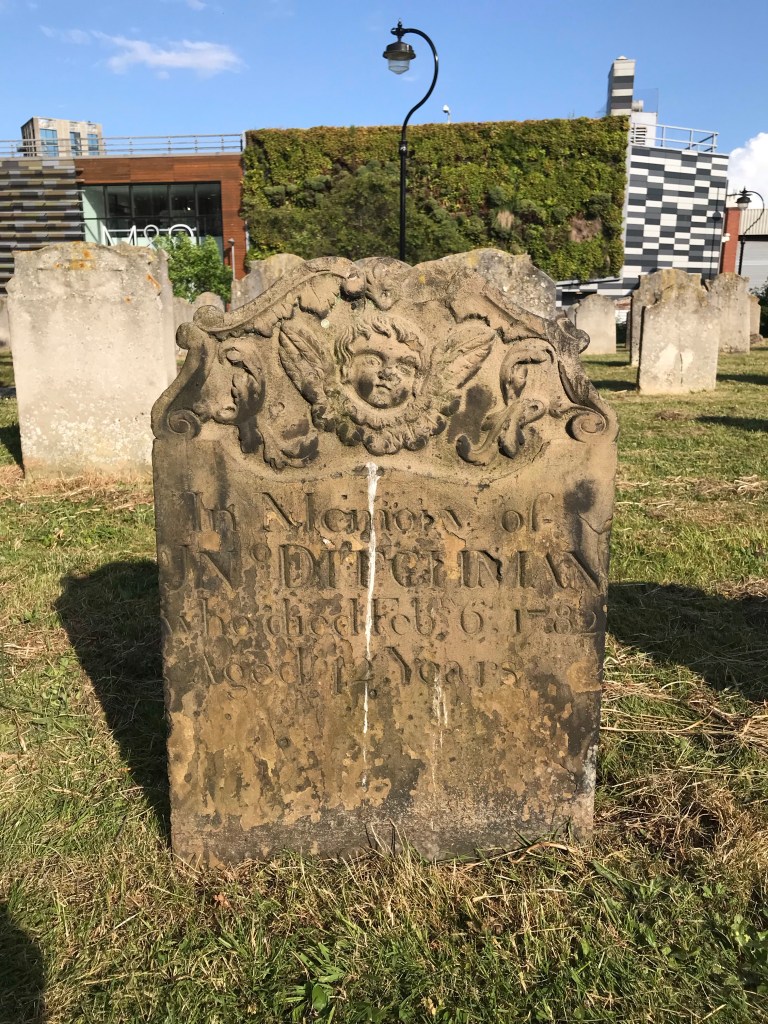
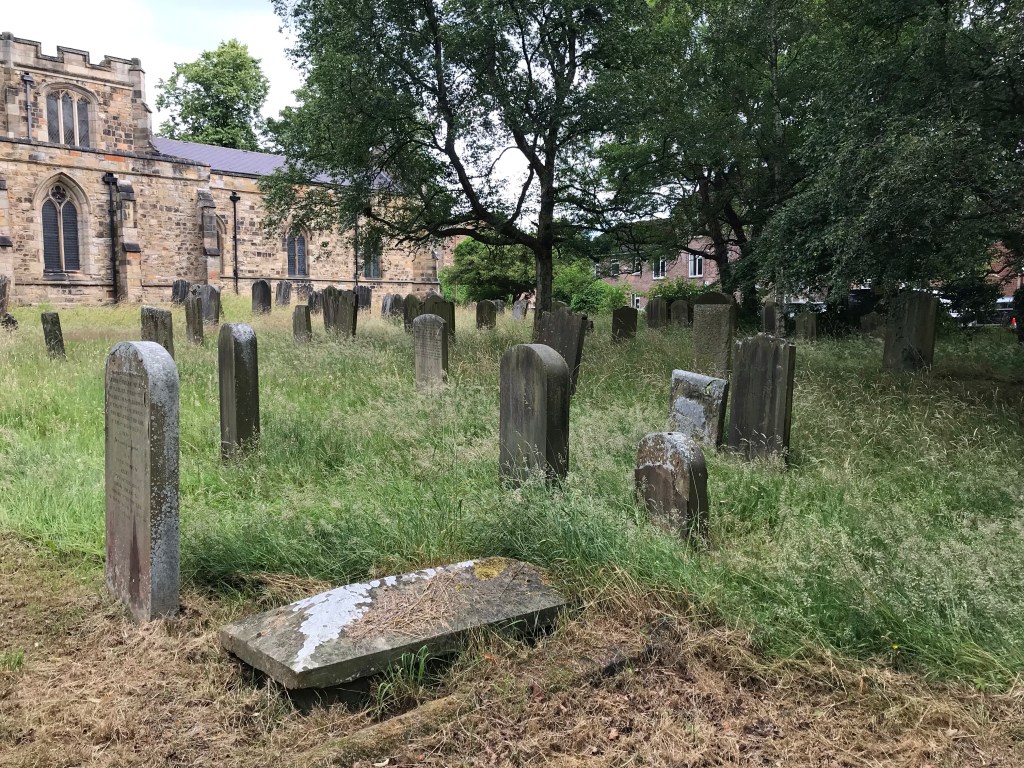
St Peter Mancroft Church Burial Ground, Norwich 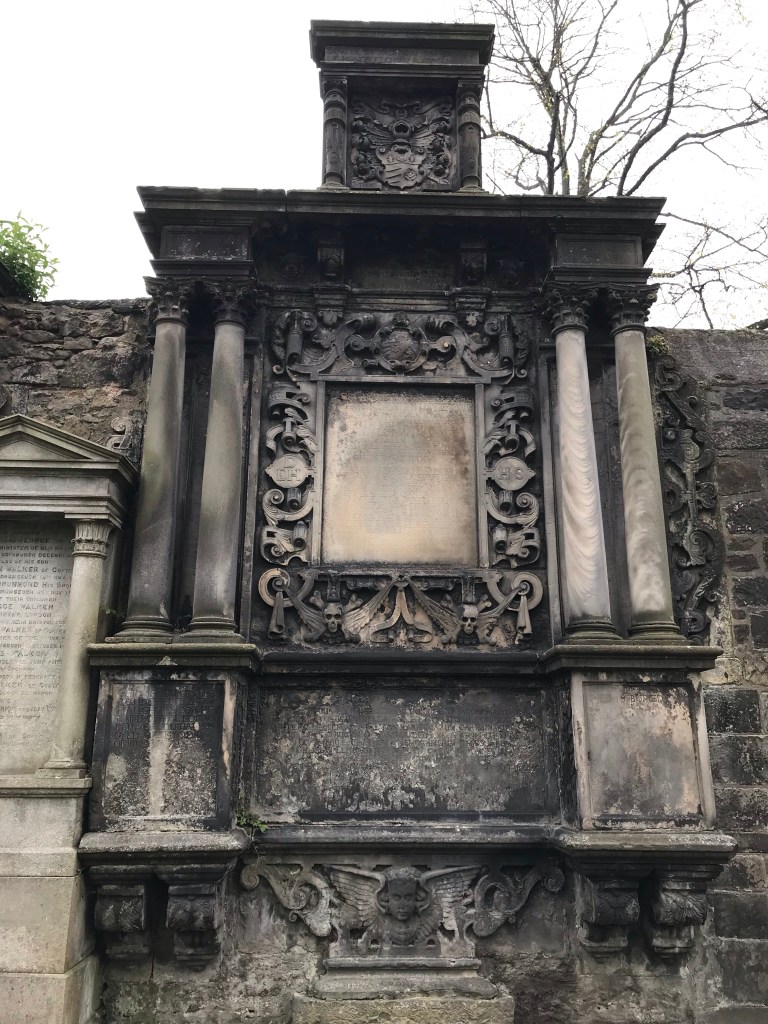
Greyfriars Kirkyard, Edinburgh 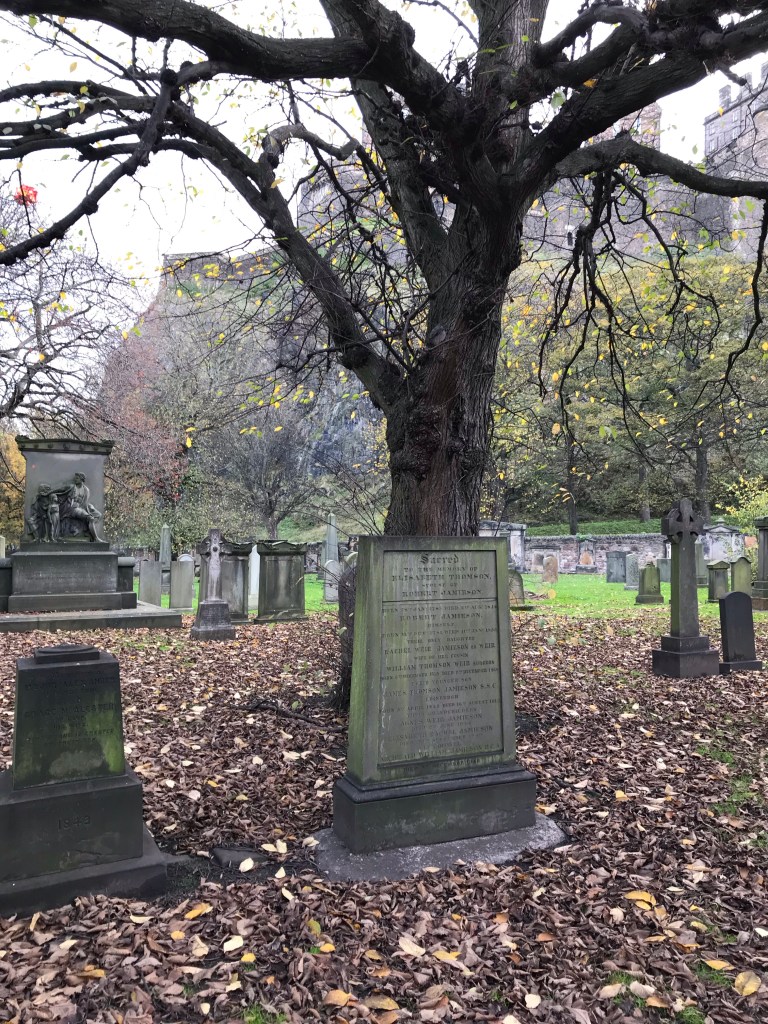
St Cuthberts Kirkyard, Edinburgh 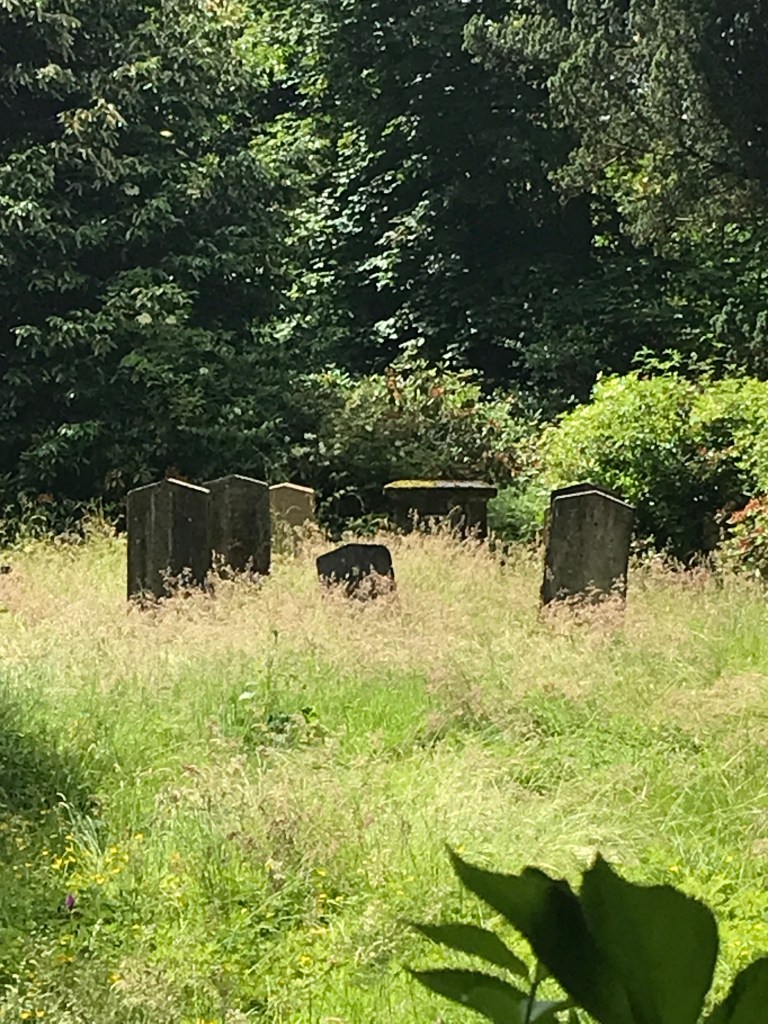
Private Burial Ground of the Gibson-Craig Family, Heriot-Watt University, Edinburgh -
Conference Crawl Anyone?
In a useful follow-up to my previous post concerning finding yourself at a conference that did not quite meet your needs, I can now present the opposite outcome. Over the last week I attend 2 further conferences and, thankfully, I can report that these experiences gifted me some very useful material and connections.
Conference 1: The First Annual Graduate Student Conference on Economic and Social History
This first outing is what I believe to be the absolute best kind of conference and the reason why you should periodically browse around to find events. I discovered this conference through my Economic History Society membership and, seeing that it was 1. local, 2. free, and 3. history related, I knew that I wanted to check it out. I confess I do not assess events like this for their relevance to my PhD before deciding to attend them, I love all things history so I am definitely going but in this instance, it did concern social and economic history thus, I was confident that I would be able to leave with some relevant insights for my own research.
Reflecting on the event I can certainly say that I was not disappointed. Firstly, being local (and a 1 day event) is a dream for my finances. I hopped on the bus to Edinburgh university for £2 and, after snacks, the whole day probably cost around £10. The location presented the added bonus of being able to explore the National museum during the break and wandering around in amazement at all of the nice cafes around Bristo Square.
For the conference content itself, every presentation was fascinating and more than a few sparked a lot of personal interest. Some of the content explored covered the mapping of historical furniture makers of Edinburgh (some very interesting possibilities here for future expansion of my thesis), Che Guevara & voluntary labour Human Capital & Philanthropy in 18thC Scotland, The British Left & Communist Poland, Protectionism & Pensions in Argentina, Zakat-the 3rd Pillar of Islam in tackling Poverty in Africa, Chinese Migration in Shanghai’s foreign settlements, Growth of small towns in 19thC England, Black & Black History Representation in Period Dramas (the inspired a lot of thought around “Historical Accuracy” and how removing black history from dramas actually creates the inaccuracy creators claim to be avoiding), and Poverty in 19thC England.
Hopefully I have not missed anything (I attempted to record the topic of each presentation) but if I did, I assure you it would most likely be due to my engrossment in the presentation and forgetting to take notes.
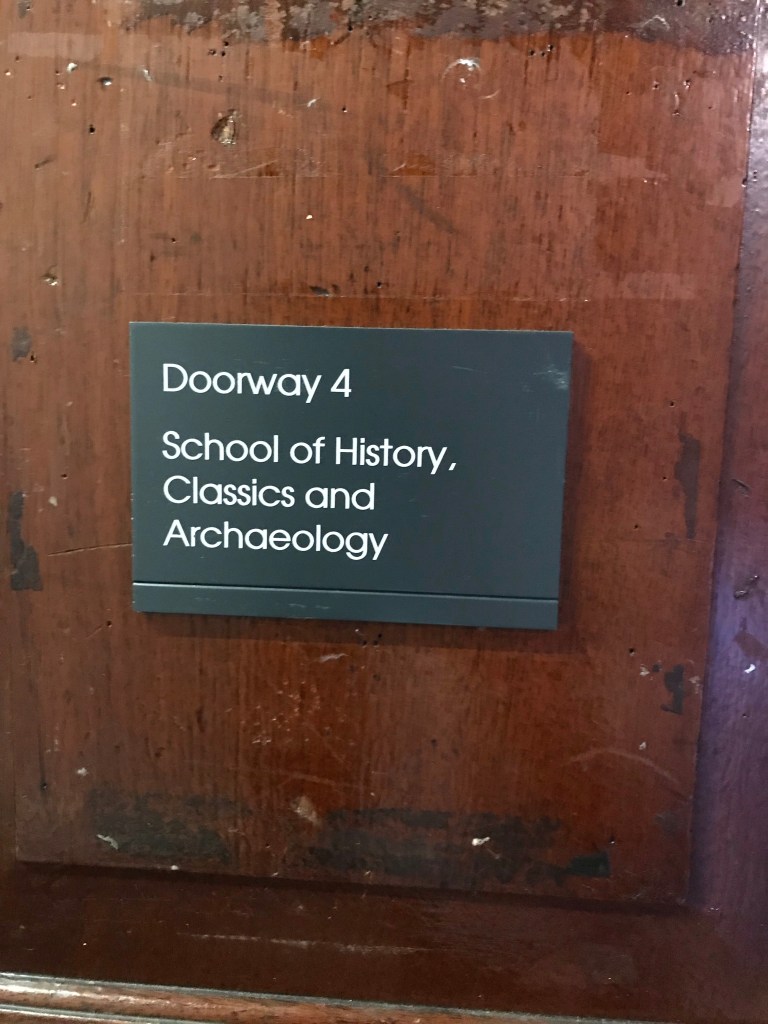
The conference organisers and one of the University Departments of my dreams (I wanted to be an Egyptologist and, to be honest, I’d still like to bring Egyptology into my research now that I have learned that interdisciplinary is a thing)
DCDC23: Discovering Collections, Discovering Communities Archival Conference @ Durham University
My next conference came not but 3 days after the first where, this time I hopped on a train to Durham for DCDC23 for 3 days. I admit I cannot fully recall how I discovered this conference, I suspect it was another periodic event hunt (I should do a separate post on this). Although it contained no reference to accounting, as I am utilising archival research for my thesis, this seemed like the best place to be to learn more about archives and meet some people from archival, museum and library backgrounds.
The conference began with its “History Day” exhibition, a set-up that saw various archives/libraries making themselves available for questions, promotion and all sorts of related magic. Now sadly, it felt like every archive was there except the one I intend to use (Bristol Archive), this is definitely an exaggeration as I am certain a vast number were not present but let us allow me this small flair of the dramatic this once. I did however, get the chance to talk to representatives from the UK National Archive who were very helpful and have given me much hope of finding additional content for my thesis.
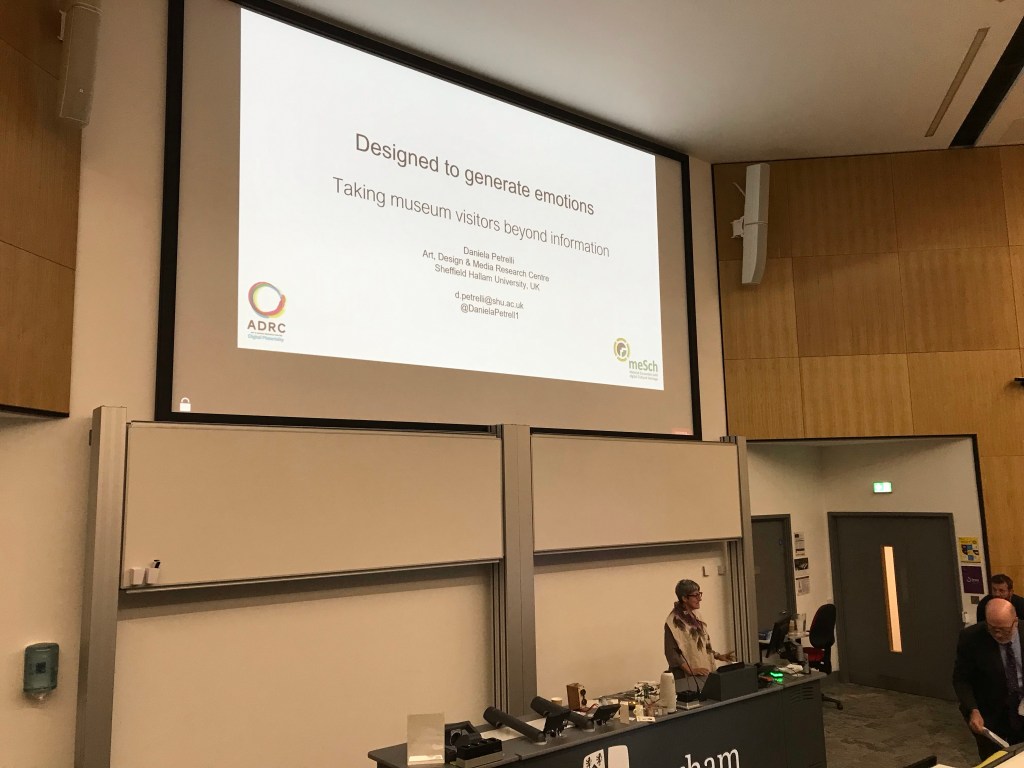
For the conference itself there were a mixture of keynotes, panels and workshops, all of which presented me with some very useful materials for thought and consideration. The point of the conference was not to introduce subject matter such as the previous conference but instead, to introduce me to ways that I can perform and present archival research. Thankfully I can report that I have been introduced to many avenues of exploration regarding how I might use and present my data visually in my research thus, we can call this conference a success.
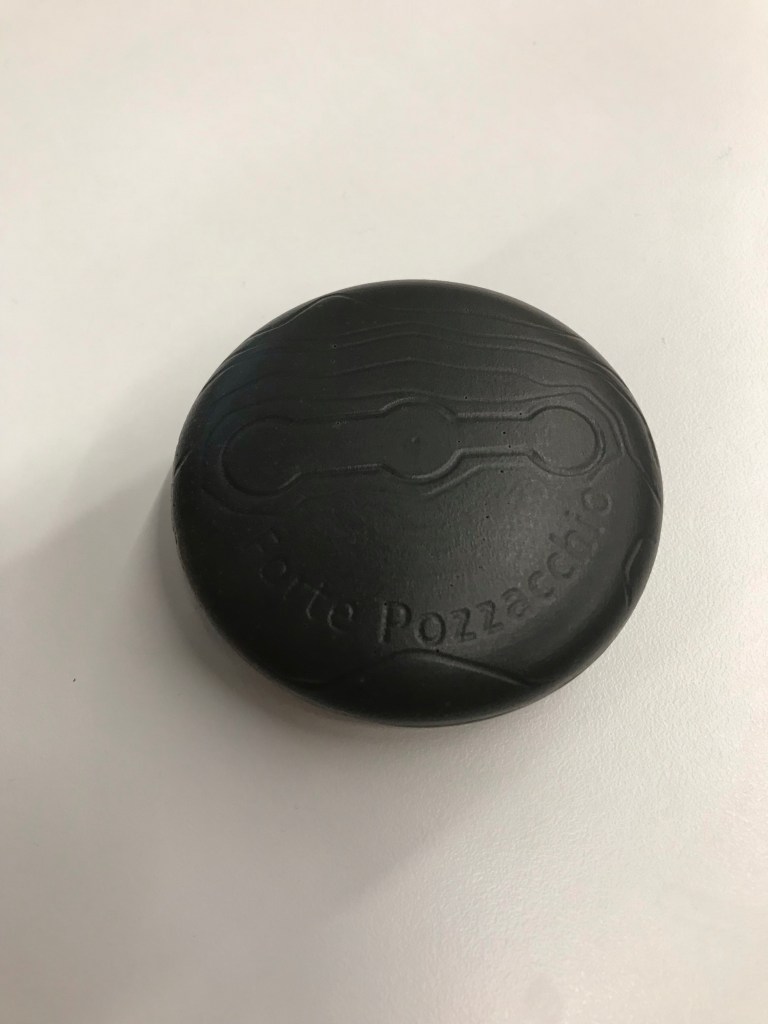
The “Pebble”: an example of one of the numerous ways that technology is creating tools to encourage engagement with museum collections
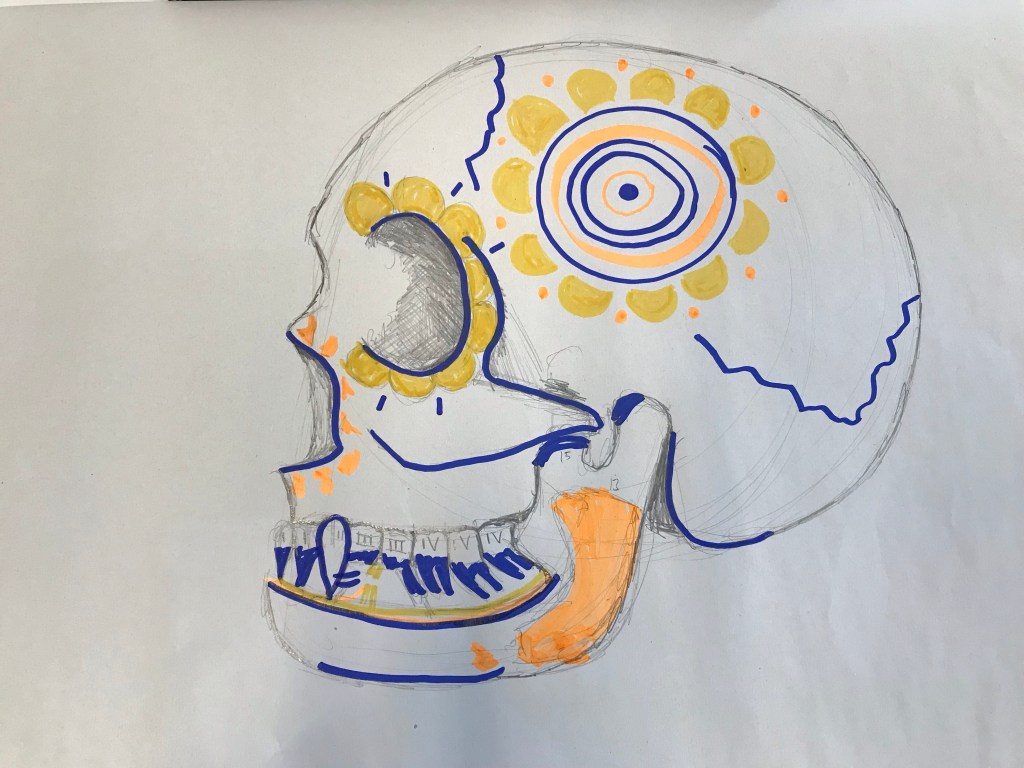
My drawing from one of the workshops, my idea was using anatomical models to teach both skeletal structure and about different death cultures (Mexican death practices in this case)
Let us now take a moment to share in frustration that I had finished typing this post but when adding in photos I somehow deleted the final 4 paragraphs… *screams*
Let’s try this again, Reflecting on the Conferences
This months conference outings both reiterate the learnings of the previous post and introduce some new points for consideration. The main lesson again is to choose your conferences wisely. These two conferences bore no relation to accounting research yet, they proved more valuable than the accounting conference that I attended last month. Thus, you really need to be clear on what you are doing in your own research and decide if an event includes aspects that would be beneficial to your specific needs/interests. Adding to this is the second lesson, and the reason for choosing wisely, conferences are expensive. Had I not attended the conference last month, my university expenses fund would not now be sitting fully depleted, I could have had the funds to attend next years BAFA conference for example but now, I will need to start saving to self-fund it.
For almost every conference there is a big financial commitment. There is the tickets, travel, accommodation and subsistence, none of which comes cheap. Further, while I have found the opportunity to explore new parts of the UK to be really enjoyable, I have a weakness for books and fancy snacks. The books may be cheap (second hand mostly) but, when you are buying them everywhere you go, that adds up (entirely my fault though, I could just not buy them).
There are ways to reduce costs (another future post perhaps) but still, a reasonable financial commitment is inevitable.
So what’s next?
As you may have guessed, I am going nowhere until my bank account recovers and my savings are restored. Thus, (and you should perhaps expect no less from an accounting PhD) the next few months will focus on super budget management.
As mentioned, I am doing archival research thus, funding will be needed to carry out Data Gathering expeditions to London and Bristol thus, I will be both saving and attempting to source and apply for funding (yet another future post).
In the meantime, my Bristol data does at least exist in digital transcribed form thus, for now it will be all data gathering and analysis. Expect lots of reading, writing, analysing, and pondering. Hopefully the next few posts can return to some research subject explorations. I did pick up a very interesting book in Durham (thank goodness I had a piggy bank full of £1 coins because I had to empty him to buy it) that will make for some very interesting research possibilities.
Until then, I leave you with 2 of the stupid things I bought in Durham…
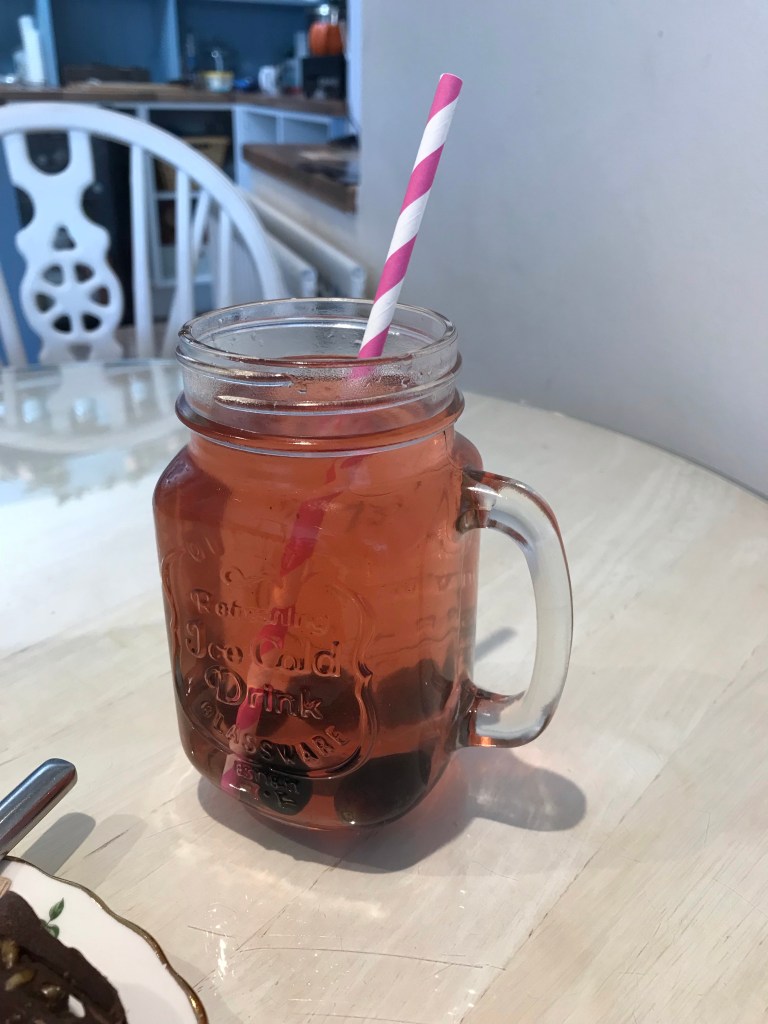
Tea in one of those jam jar glasses, like I said fancy/silly snack weakness…
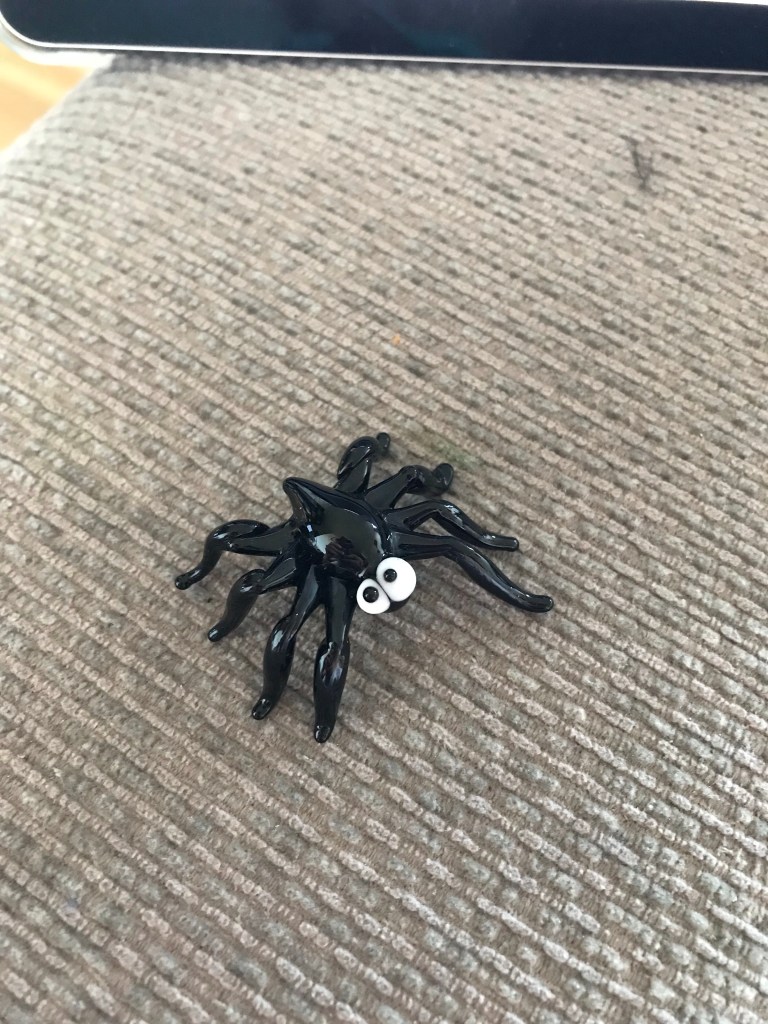
A glass spider, I have pet spiders (1 jumping spider, 1 tarantula) it felt necessary…
Follow me on Bluesky
@lniezynski.bsky.social

