From the beginning of my PhD, I noticed the word “engagement” getting thrown around a lot in the university (and in a number of other academic events I would attend). My initial reaction to this was abject fear as I pictured me trying to do research with children (while I have learned that I do actually really enjoy teaching in Higher Education, children still frighten me), in short all I could see was chaos and terror.
As I have now gone through and emerged from the other side of the PhD, I see now that engagement is far more than reading to children (I really have no idea where I got this idea from but it cemented itself in there at some point). Over the last two months in particular, I have even gotten to try out “engagement” and I have to say, I really rather enjoy it too.
Making a real difference: cliché? I think not
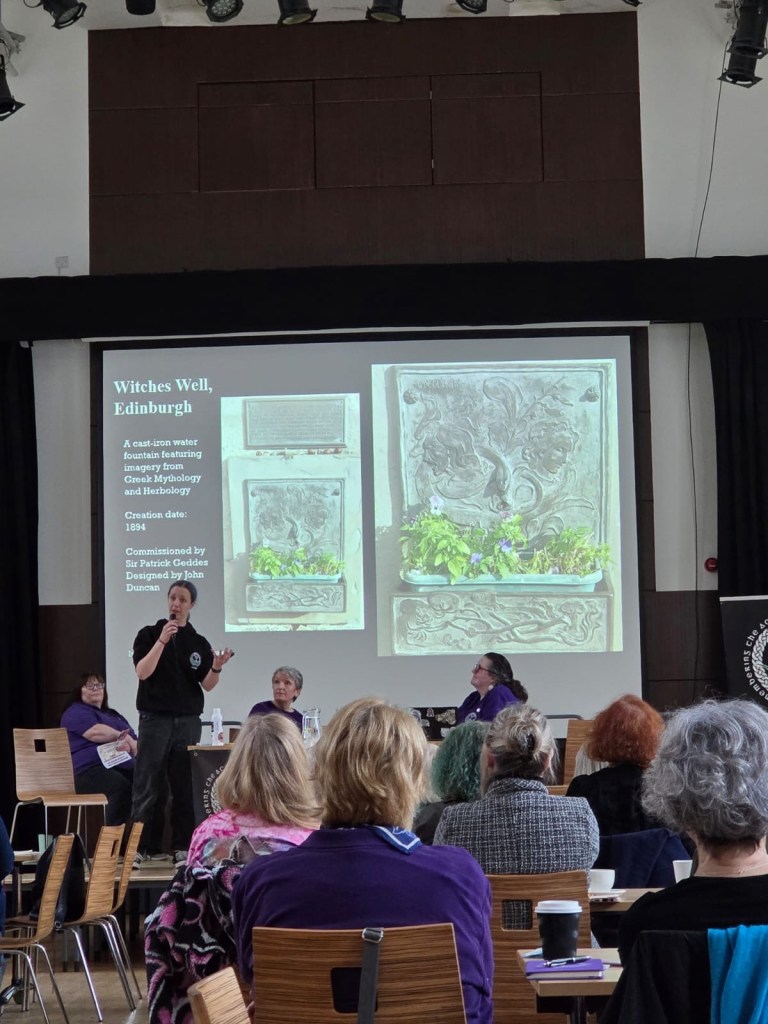
My first foray into “engagement” fell on Halloween of all days, arguable on theme with the terror idea but then, I rather like Halloween. I took part in my first public talk with Remembering the Accused Witches of Scotland (RAWS), forming part of trio discussing the history of the Scottish Witch Hunts. This was the first time I had actually spoken to an audience who were neither of the academic conference nor lecture students association. I wasn’t nervous, quite excited in fact to be speaking without the burden of critical appraisal. As hoped, the talk went well and I was met with enthusiasm and questions. Reflecting on the event afterward, I noticed my primary impression was a huge feeling of reward. Firstly, it was hugely gratifying to be speaking to people who (voluntarily) signed up to listen to you. Second, there was a great sense of joy in knowing you had made people happy and/or enthused about a subject. It was this sense of enthusiasm and interest that struck me, as it was something that I just haven’t felt so strongly in an academic setting.
That is not to say that academic audiences aren’t engaged/interested (quite the contrary), but it is a more “clinical” setting if you will. Usually the audience is there for reasons in addition to pure enjoyment and interest, usually learning course material/providing peer assessment/feedback of research. A public audience in contrast is there purely out of the enjoyment of learning, a “non-captive” captive audience in a way.
I followed this event up 8 days later with RAWS first in-person conference, “Remembering the Forgotten Voices of the Accused” in Glasgow. Again, I presented here with my fellow RAWS trustee, sharing our recent exploratory research of witch trial memorials. This too provided the same rush of enthusiasm, reward, and joy from the audience. This too stemmed from this lightened sense that you’ve been able to give knowledge to people without expectation; you aren’t there to get publication tips from them, they aren’t there to meet a regulated learning criteria.
I should highlight that the key observation here is that this conference was a “public” conference, not an academic one. Returning to the idea of the academic conference and why it feels different; for academia there is perhaps more of a transactional sense to a conference; I very much enjoy them yes but, I am sharing my work with you from a perspective of very much expecting some sort of review in return. This transaction can still be positive yes, but primarily it is to be useful rather that emotionally uplifting, it’s intent is fulfilling a career development goal. Therefore, in a way, the academic conference is almost selfish (not in a bad way, but in the sense that you are there to help yourself) whereas public engagement is about being their for someone else.
Another foray into the land of engagement has been joining the Friends of Greyfriars Kirkyard (FOGK) committee. This spawned from volunteering at their “Doors Open Day” in September and again finding the opportunity to share history with the public to be a thoroughly enjoyable experience. While I admit there is a degree of selfish/self-indulgence here (any chance to talk about history for me is worthwhile), there was still something utterly wonderful in giving people an insight into the past. Not only was this (as noted) a chance to talk about history to people wanting to listen, this was advocating for the preservation of a significant site in Edinburgh while simultaneously introducing people to the rich history of Edinburgh itself.
Ok so let’s do both then
Now fully aware of the reward you can gain from engagement (and very importantly for my strange delusions, does not have to involve reading to children), there is the question of how then do I do research that can encapsulate all of the above? How do I do the career developing stuff in conjunction with the reciprocal pursuit of “giving back through knowledge”?
Post PhD can often feel a little like being adrift at sea. Where once there were set goals/objectives/purposes, now your somewhat left entirely to your own devices. You’ve set sail, but where are you actually going?
Yet, through this engagement work I have found direction. For me this has indeed formed quite naturally through these ventures with RAWS and FOGK. I see now that I can pursue projects that can actually deliver insight and meaning to these groups that I have joined. I can shift from “where are the gaps in the research” to “what can I do to help these endeavours succeed”? Further still, I find myself directing attention and other research ideas toward “what can I do engage the wider world with this” in addition to “can I get a publication out of this”.
Sadly I know that vicious publication cycle will never go away, everyday it feels more like the “get a job for experience, but you need experience to get a job” loop. However, now I feel like I can look a little wider, I can see that there is impact and reward to be had beyond publication metrics. It is incredibly cheesy but, growing up (and even now) I always wanted to make some kind of difference and impact in the world, and now I feel that, through engagement, I might just be able to do that.
 Accounting for Humanity
Leave a comment