As I (try) to embed the habit of regular posting I have realised that fully researched/cited blog posts in conjunction with researching/writing a thesis may not be entirely plausible as ‘down time’ is very much a PhD necessity (after all, Halloween sweaters do not knit themselves). I do however, desire to share my research thoughts and interests thus, “Research To-Do”.
One habit I have fully embraced in my 2+ years so far is the collation of a “future research” list. This list is lengthy and I am impatiently waiting to get started on it. So, to appease my desire to discuss these topics without fully committing to fully researching them at this point in time, this new series is my way of introducing you to my research interests.
Death & Double Entry: Accounting and the Dead
First on the To-Do is death. As a researcher, and a human, other humans are fascinating. Life and how society lives it is fascinating. There is one aspect of life that as humans we all share, and that is death.
Death culture in society is among the most diverse aspects of life. Almost every society views and treats it differently, even within the same society, that view can change over time. For myself, it is the historical aspect of death, the ‘what is left behind’. Death leaves behind a legacy of life, a final account of the human that once walked this earth. Good or bad, memorialisation of the dead is the (tinted) window to the past. Should we wish to view the historical activity of a company, one place we would turn is its ledgers, if we wish to view the historical activity of a society, we too might turn to a more physical, sombre ledger, a cemetery.
And this is where I admit that I am a taphophile…
A what?
‘Wiktionary’ (website discovery of the day) tells us that Taphophilia is the “Deep interest of funerals, cemeteries and the rituals of death.” And this quite accurately sums up my interest.
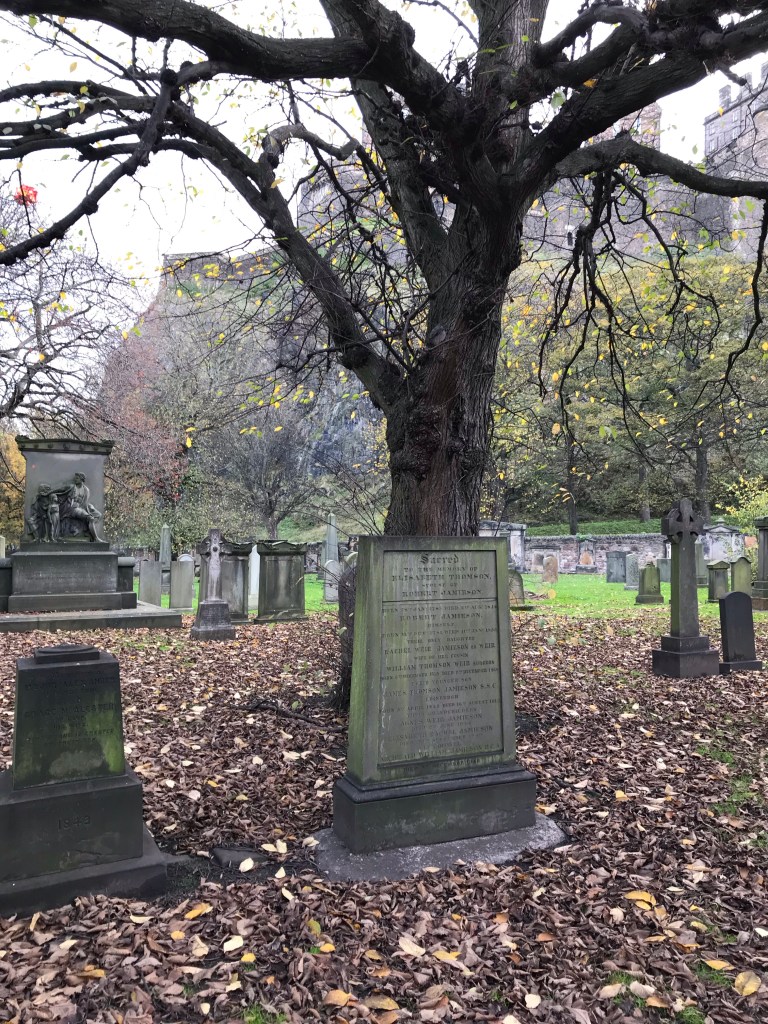
For many, the cemetery/graveyard/kirkyard/churchyard/necropolis is an unsettling and sombre place. As mentioned, for myself, they are windows to the past, memory and art combined. Must can be learned about a person (and a society) from their head (or foot) stone. In my conferencing this year, I’ve been able to explore a small number of cemeteries/graveyards/kirkyards, and in doing so I have learned and been reminded of many an interesting lesson.
Women’s Place and Death in History
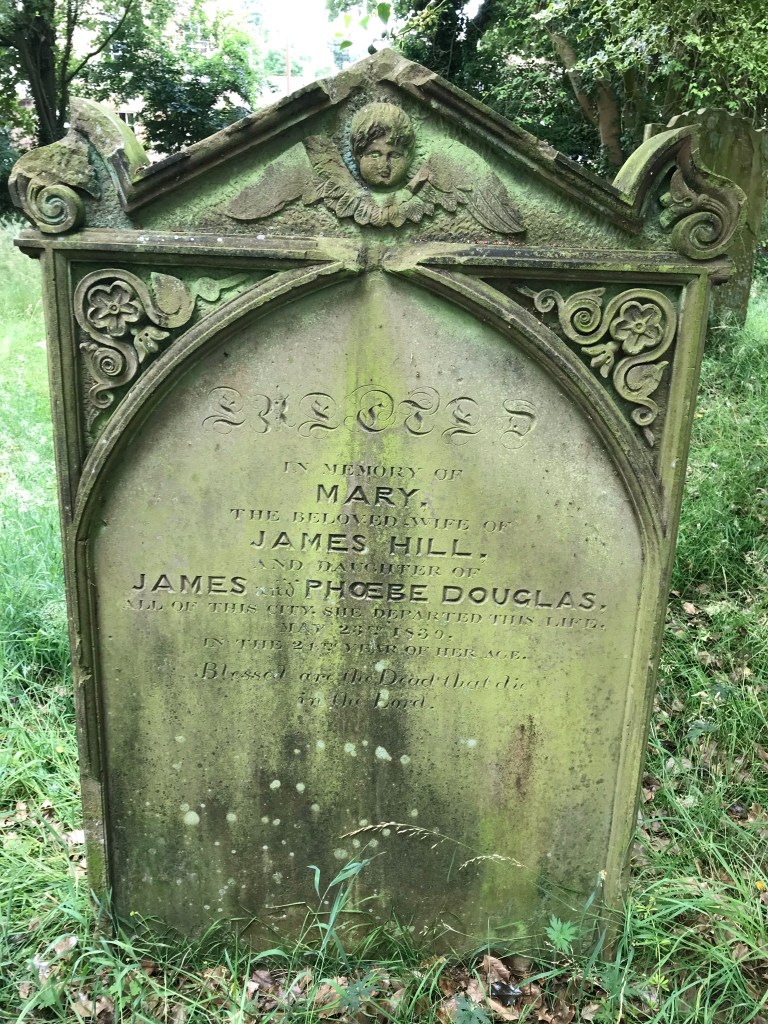
The inequality faced by women throughout history is certainly not new knowledge however, seeing the historical graves of women in the UK has reminded me of how little the contribution of women was valued. Almost all women’s grave markers told us not who this woman was, but who they were associated with. In some cases, women’s grave markers actually had more space dedicated to detailing the life and successes of their husbands than what they themselves achieved in life. It serves as a painful reminder that for the most part, women have been consigned to being a mere footnote in history, an accessory, or possession, of a man.
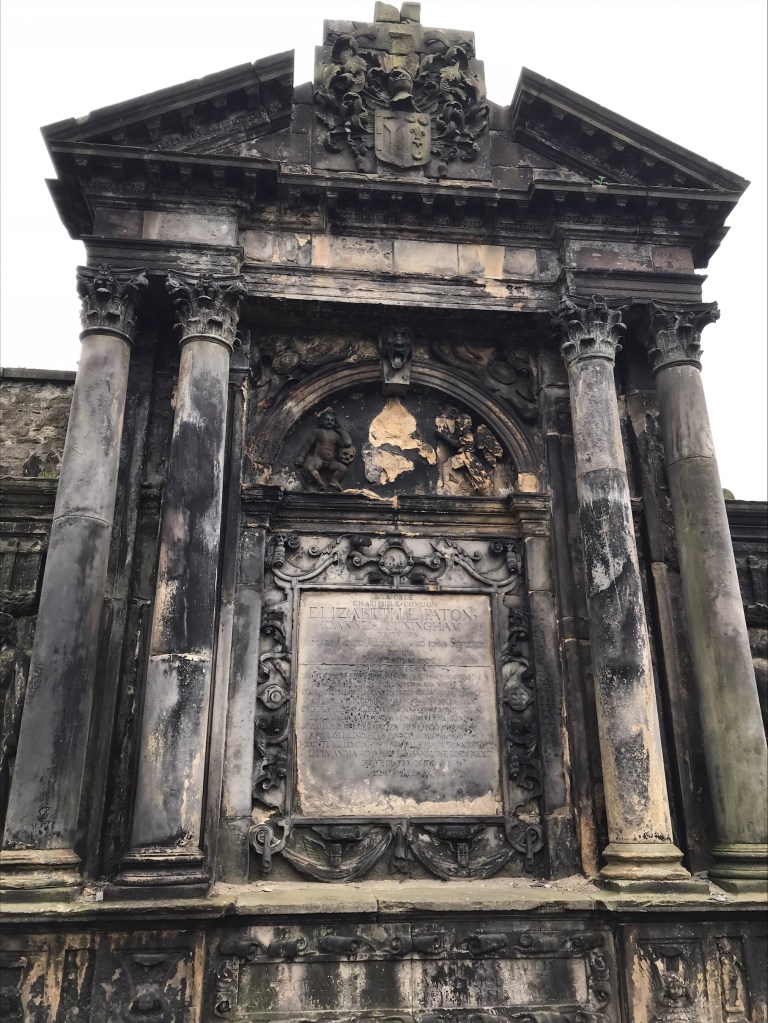
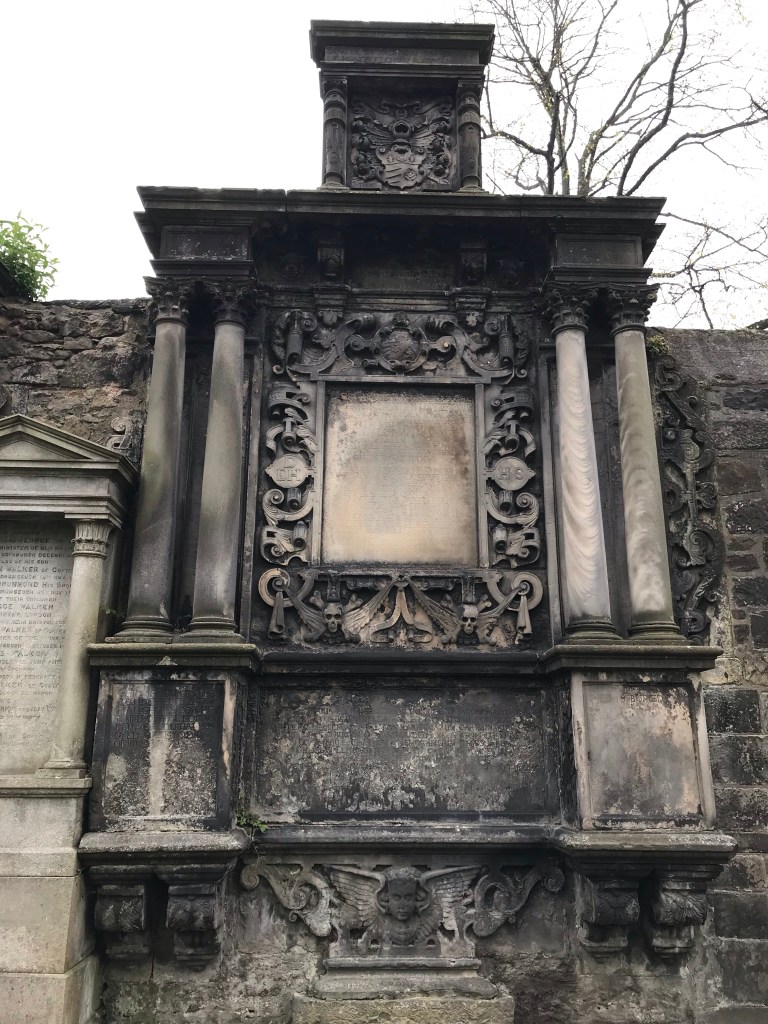
There are exceptions though, in the world famous Greyfriars Kirkyard, I discovered a remarkable memorial for Elizabeth Paton. The memorial is in Latin (I am learning but not quite at the level to translate) however, placing faith in Canmore the inscription details the many virtues of Elizabeth. It is likely that these will still focus only upon her role as a wife and mother (not a criticism of being a wife and mother, merely emphasising that women are individuals out with these roles) however, whatever it may say, at least it is dedicated purely to Elizabeth, the centrepiece of their own memorial as they should be.
And what does any of this have to do with accounting?
As hinted above, accounting holds strong connections to death and the connection depends on how you answered the question of “what is accounting?” a few posts previous. If accounting is a purely financial exploit to you, then certainly there are avenues to be explored in the realm of the dead, be they analyses of death-related organisations or the financial position of individuals at their time of death.
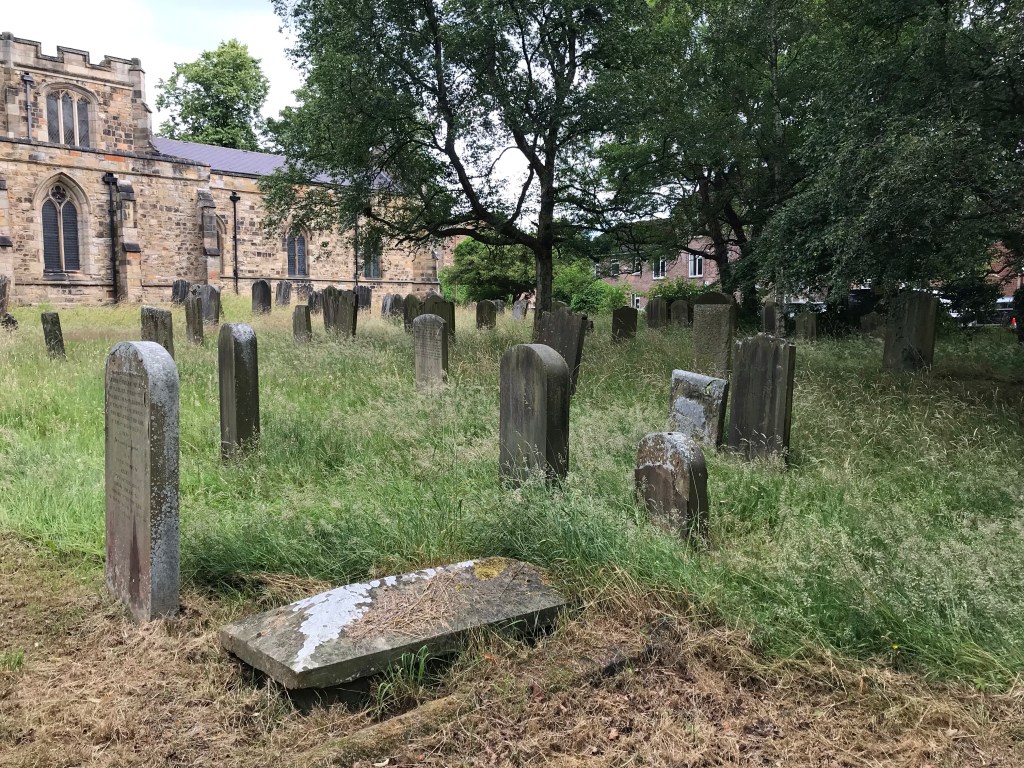
If, like myself, you believe that accounting is more than the act of financial recording then there are many more avenues to explore in the land of the dead…
‘Accounting’ expanded is the act of taking account, making a record of something, be that financial or otherwise. To ‘take account’ is much like the concept of accountability, proclaiming responsibility for acts or possessions. One are where this gains interest is in religion, death and accounting. The ancient Egyptians among many civilisations, took details accounts of endeavours and offerings made in the name of the Gods. In doing so they were garnering favour with the Gods, proving their worthiness for a comfortable place in the afterlife. In this approach, accounting becomes a pivotal part of death, accounting for God(s), even in contemporary media, I am reminded of Johnny Cash singing how “the old account was settled long ago” in reference to gaining entry to heaven.
Study could also extend into accounting, society and death in a similar manner. Consider the prominence held in ‘public opinion’ both now and throughout history.
And now back to the land of the living….
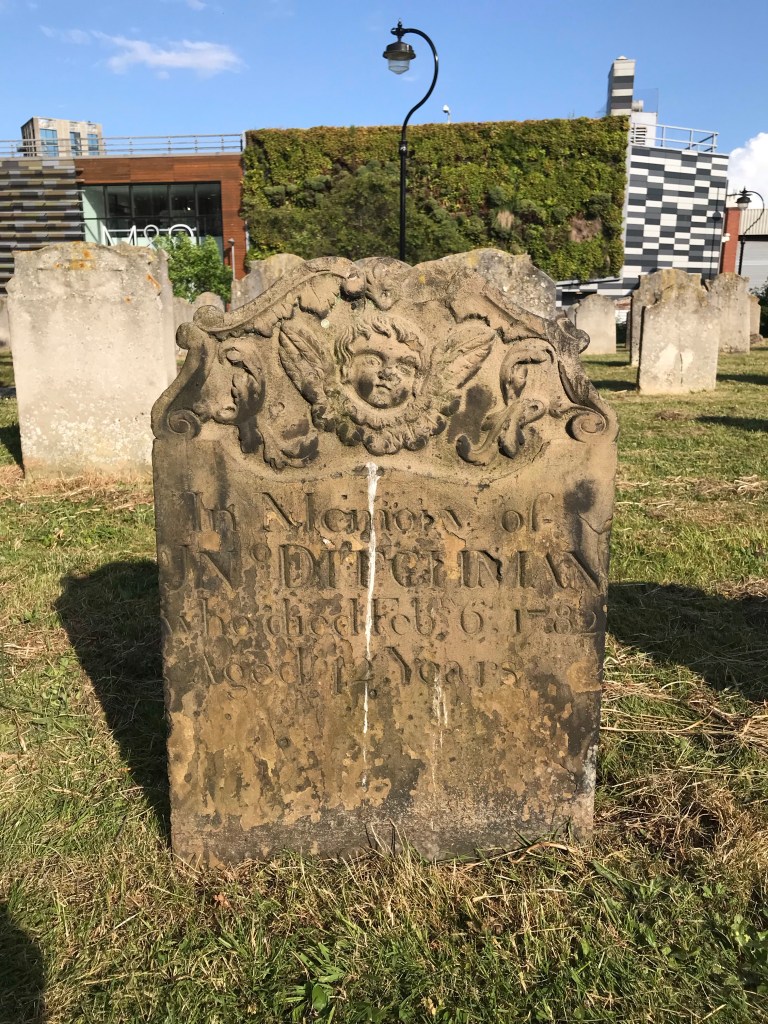
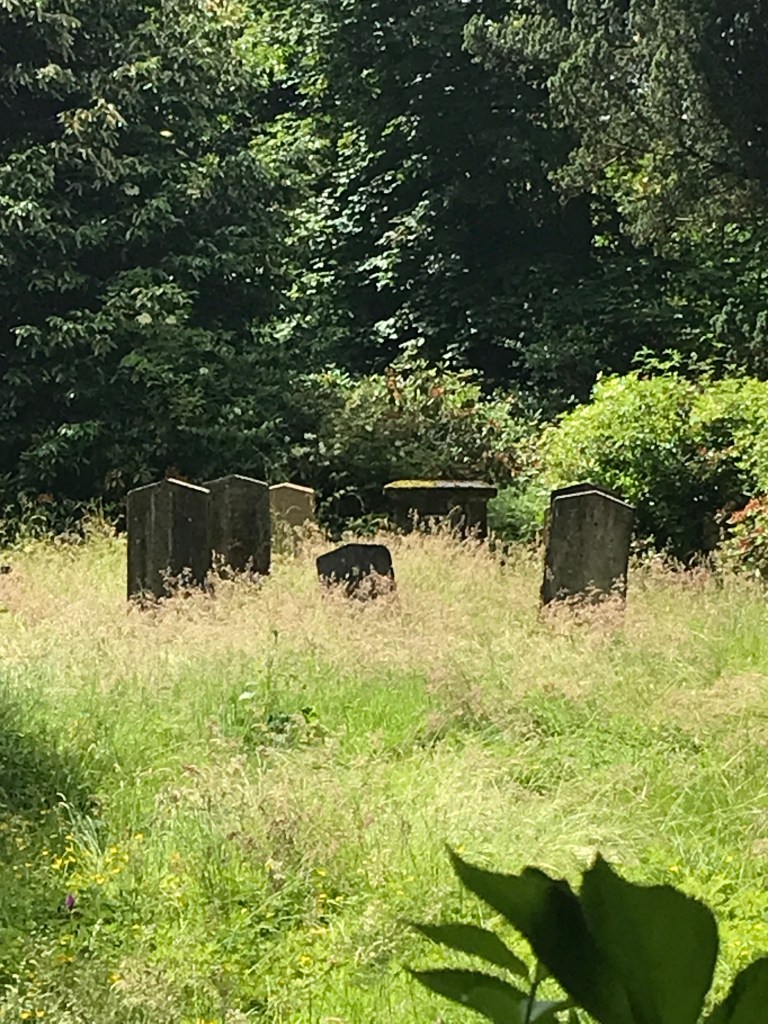
There is certainly much scope in this area and I hope that one day I can explore this avenue to contribute to conversations around death and the death positivity movement. Death is all around us, Memento Mori’s lie scattered throughout our world, hidden in plain sight. Even within the very grounds of my university lies the Burial Ground of the family who once governed the estate where Heriot-Watt’s Edinburgh campus now stands.
For some, good accounting is all about hard work and reaping the rewards, for others, it is about accounting for the souls reaped long ago. Hold onto those pennies, you will need them for Charon…
 Accounting for Humanity
Leave a comment