(Disclaimer: Here you will learn that I am a dedicated fan of Nintendo’s ‘Legend of Zelda’ series)
After almost 2 years, this week I finally hit the milestone that has haunted me from day 1. I defined my research questions.
Of all the mental struggles that a PhD can bring (a topic for future discussion rest assured), the defining of a research question is the one that has made me feel the most vulnerable in these first 2 years of study (note: I have been a part time student for the first two years). It was the factor that constantly reminded me how unfamiliar I am with undertaking a PhD, I had never done this before, how am I to know what is the ‘right’ question and what is ‘wrong’ question? I know this line of ‘right and wrong’ thought is not helpful, unfortunately my thinking can be quite ‘black and white’ at times; my anxiety continually fights to make me forget that those tantalising shades of grey that bring reason to thoughts and ideas exist.
I always had a base concept of what I want this PhD thesis to be, I want to show the world that technology is not as terrifying as we often see the media portray (another note: the film M3gan is a fascinating interpretation of our relationship with technology and a fantastic example of how the media vilifies AI/Robotics). However, this concept alone was not enough, I need to have a specific focus that will bring this concept to life thus, I need research questions.
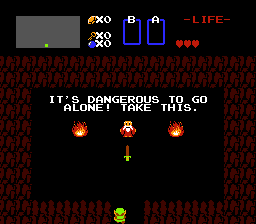
As mentioned, I have never done a PhD before and as such, I have no idea of what this journey entails nor do I know how I ‘make’ a research question. To add further complication, unlike my crafting pursuits, YouTube would not provide a tutorial to get me through this time. I had read countless guides and ‘how-to’s’ on how to refine a research question, but it was not producing a viable result, the questions were either too vague or so expansive that I could never answer it in one thesis. As a result of my confusion and frustration, I would spend my time punishing myself for not having a ‘good’ question, a trial so prolific that it was causing me to question if I even had a worthwhile contribution to make in this research field or if I were merely clutching at straws in a bid to write extensively about ‘something I like’.
To attempt to aid my efforts to see this quest to a successful end, I opted to just keep reading and writing, I felt that I could not do anything else so I may as well carry on with the one thing I could do. With every paper read, I would add a paragraph to my summary notes; what was this paper saying, what was it not saying? What was happening ‘between the lines’? Every summary became a miniaturised literature review in itself. As set forth down this path, my knowledge grew with each cautious step until I would eventually stumble across my salvation, courtesy of my supervisors (this tale also demonstrates one of an infinite number of reasons why supervisors are pivotal). In my reading, writing and pondering (I do a lot of ‘pondering’ the only positive attribute that my anxiety brings with it) I discovered two interesting theories that offered explanation to the findings that I was reading in the literature and thus, I began to write about these theories too, summarising how they could relate to accounting. Upon meeting my supervisors in the latter half of 2022, their enthusiasm appeared to ignite anew at the sight of these theoretical concepts. There was something exciting in this idea, it was the missing link, the (almost) final piece that explained the puzzle that was my literature review!
With these theories underpinning the literature, we could finally see a research question forming; it was neither complete nor perfect but at last, my concept could be aligned to a specific area of research in the field of accounting and technology. That was both the relief and motivation I need to forge ahead on PhD quest. I would thus spend the following 4-5 months once more exploring the literature, but now also exploring how this theoretical framework exposed further findings within it.
From this process I was led to another important discover only 2 weeks ago, I could not do this. Or, more specifically, I could not all of this. I had compiled a group of questions that covered the entire known history of our existence, cramming thousands of years into 3 research questions. It was not feasible and, since I had spent the prior 4+ months on the Middle-Ages alone, I knew I could never explore all the eras I wanted to. Disappointed as I was, this again was the plot twist that diverted my quest to the next level; I could use this realisation to further define my research questions by focusing on one specific era. With this I considered all the era featured in all of the content that I had read, the Middle-Ages, and I could see a gap in the narrative, the hidden gem waiting to be discovered. Thus, I boldly scrapped 2 of my 3 prior research questions and adapted the remaining 1. Now I held a question with purpose, with focus, with potential.
Ironically on my next meeting with my supervisor (not but a few days ago from posting this), my new research question was now too focused, so focused in fact, that I was answering my question within my question. Again, this was a reminder of how little I know the PhD process, but it is also highlighted the progress that I have made. After some small adaptations, I am now in possession of two research questions. Again, they are neither complete nor perfect but, unlike before, they can direct my data collection and analysis. In time they will evolve once more however, now I am fully equipped to carry on in my journey. With my ‘sword and shield’ I can take on the next set of challenges that my PhD will bring.
So it would seem the message here is that the PhD is certainly an adventure out into the unknown. Like any good adventure, we’ll get stuck or lost along the way but, if we stay true to the course we’ll complete the game.
In short, when it comes to a PhD, do I know what I am doing? Absolutely not.
But I do know that life is like a good game of Zelda; it’s is an adventure, and it takes time and experience to gather all the necessary equipment, knowledge and experience to make it to the end…
 Accounting for Humanity
Leave a comment